MLB · 1975Vintage Set Guide

George Brett, Robin Yount and one of the most colorful sets of the ’70s

1975 Topps Baseball: George Brett, Robin Yount and One of the Most Colorful Sets of the ’70s

A 660-card single-series release with two-tone borders, facsimile autographs and a rookie class that produced multiple Hall of Famers.

Few baseball card sets are as instantly recognizable as 1975 Topps Baseball. Its bold, two-tone borders, facsimile player autographs and classic photography give the set a look that stands apart from nearly every other release of the decade.

Beneath the colorful design is a loaded checklist featuring Hall of Fame rookie cards, legendary veterans, memorable subsets and two bookend cards of Hank Aaron.

The 660-card set includes the rookie cards of George Brett and Robin Yount, along with multi-player rookie cards featuring Gary Carter, Jim Rice, Fred Lynn and Keith Hernandez. It also brings retired stars Mickey Mantle and Willie Mays back into the spotlight through its memorable MVP subset.

For collectors, 1975 Topps offers more than nostalgia. Its eye-catching design creates real condition challenges, making well-centered examples with clean edges and surfaces especially desirable.

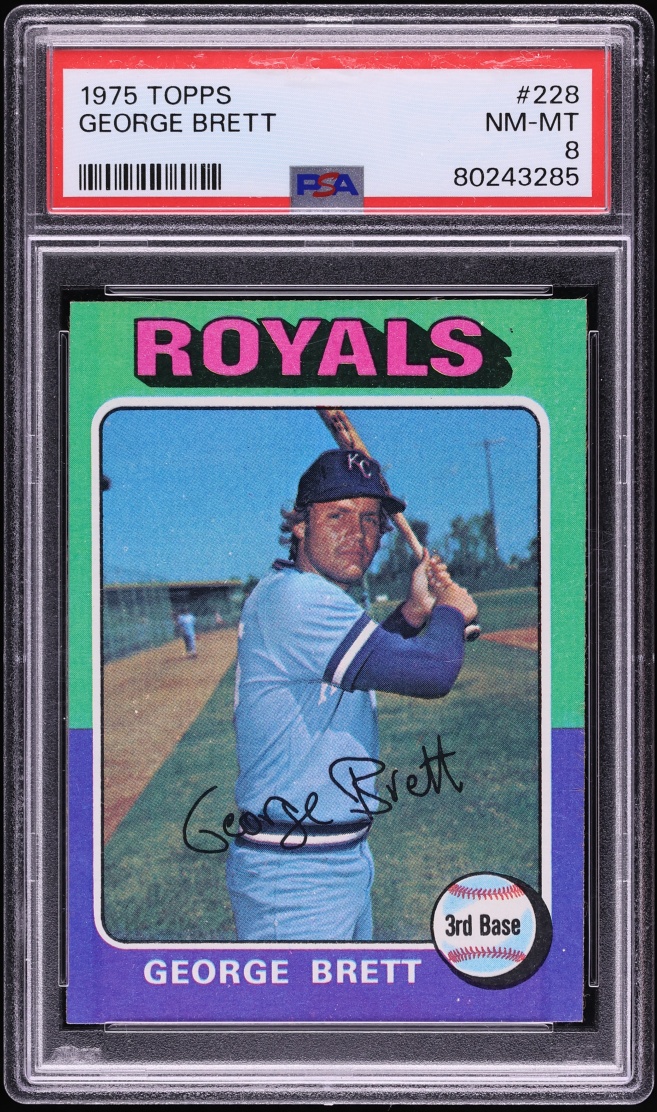
George Brett #228 · NM-MT 8

Free portfolio

Follow the players in this set.

Build your free portfolio to track their Players Invest Scores, card sales and market momentum every day.

Browse athletes

Set overview

Inside the 1975 Topps Baseball set

The standard 1975 Topps set contains 660 cards, each measuring 2½ by 3½ inches. Unlike many earlier Topps releases, the complete set was issued in one series, promoted with the tagline "All 660 Cards in One Series!" The single-series format means collectors do not have to navigate a separate high-number series to complete the checklist.

The design is the set's defining feature. Each card uses a colorful border with contrasting colors across the top and bottom, framing the player photograph. A facsimile autograph appears on the front, adding another distinctive detail to a design that has become a favorite among vintage collectors.

The full checklist also includes several themed groups, such as league leaders, team cards, postseason highlights and the MVP subset. The result is a set that works both as a complete vintage collection and as a collection of individual stars and memorable cards.

Checklist

660 cards

Card size

2½ × 3½ in

Format

Single series

MVP subset

#189–#212

The key rookie cards

Brett, Yount and a deep rookie class

Two solo rookie cards and three multi-player Rookies entries anchor the set for collectors chasing future Hall of Famers.

George Brett #228 1975 Topps
Rookie card#228NM-MT 8

George Brett

1975 Topps

George Brett's rookie card is one of the central attractions of 1975 Topps Baseball. Brett went on to become one of the defining hitters of his generation, spending his entire major league career with the Kansas City Royals and earning a place in the National Baseball Hall of Fame.

His solo rookie card is especially appealing to collectors because it combines a major Hall of Fame name with the set's unmistakable design.

Condition is a major consideration: the colored borders make chipping and edge wear easy to see, while centering issues can affect the card's overall eye appeal.
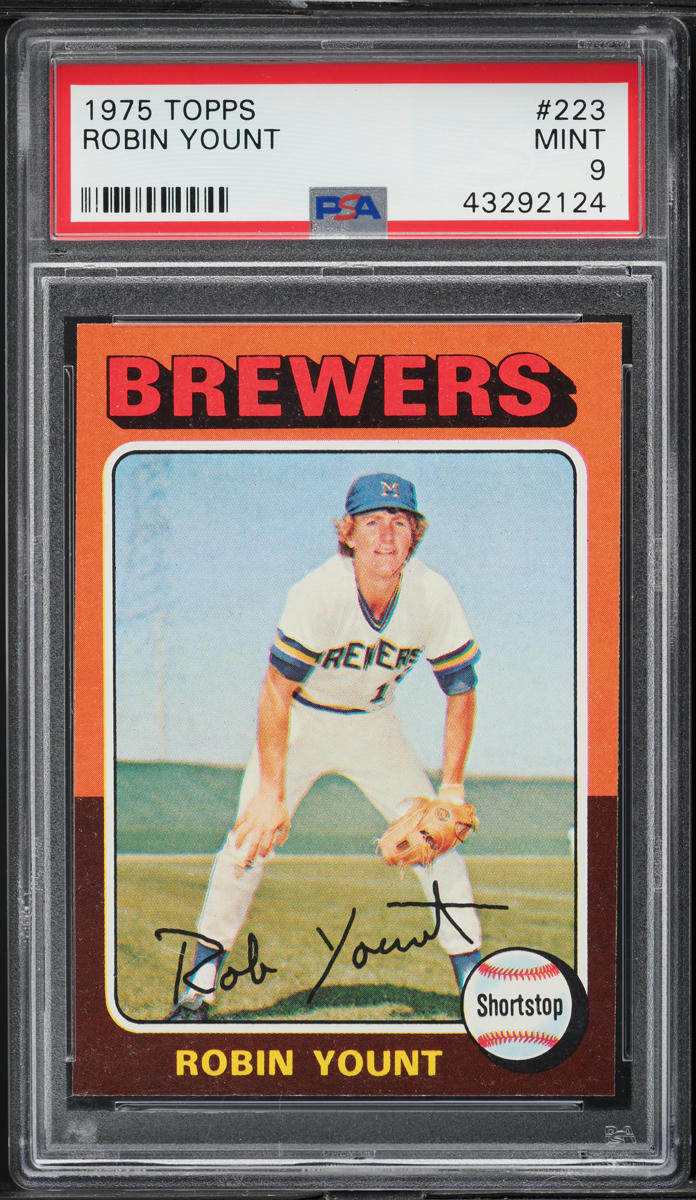
Robin Yount #223 1975 Topps
Rookie card#223MINT 9

Robin Yount

1975 Topps

Robin Yount's rookie card is another major highlight. The Milwaukee Brewers star became a Hall of Famer after a career that included two American League MVP awards and more than two decades in the majors.

Like Brett, Yount appears on an individual card rather than sharing a four-player rookie entry. That makes his card a natural centerpiece for collectors building a 1975 Topps rookie collection or focusing on Hall of Fame players.

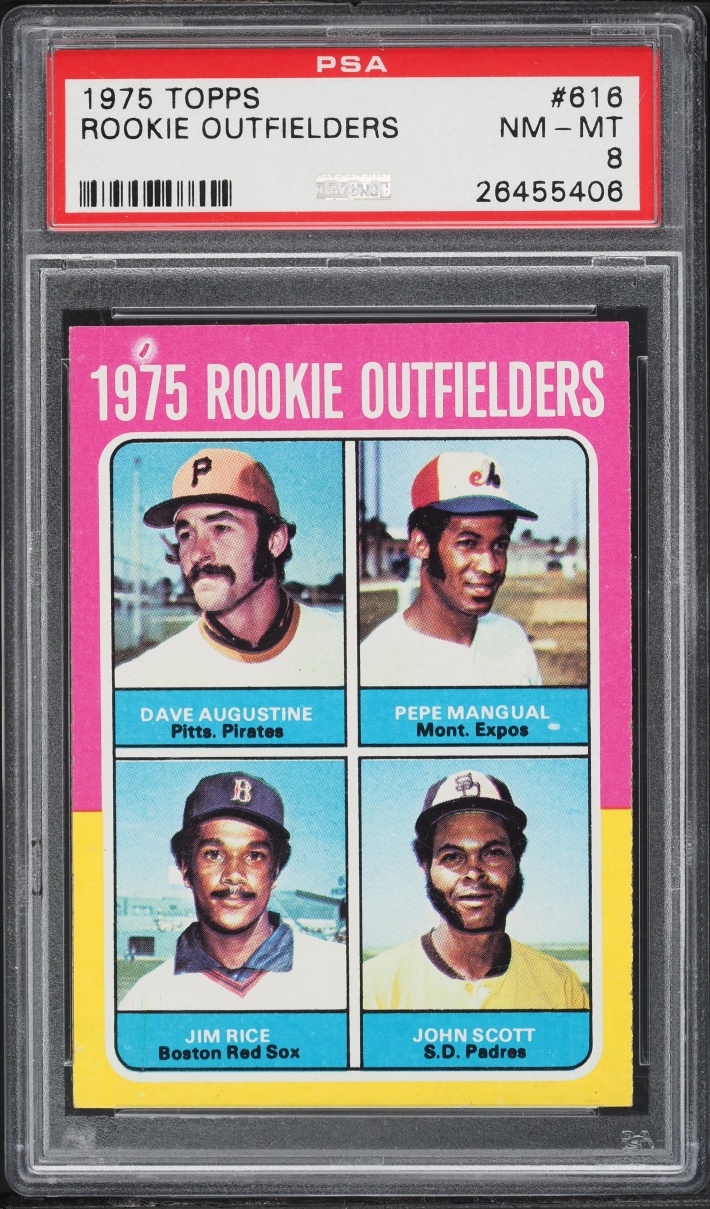
Jim Rice · Rookie Outfielders #616 1975 Topps · Rookie Outfielders
Rookie card · Multi-player#616NM-MT 8

Jim Rice · Rookie Outfielders

1975 Topps · Rookie Outfielders

Jim Rice's rookie card is another important entry in the Rookies subset. Rice became one of the most powerful hitters of his era with the Boston Red Sox and was later inducted into the Hall of Fame.

His #616 card shares space with Dave Augustine, Pepe Mangual and John Scott, so the Rookie Outfielders entry is a four-player card.

His card offers collectors a way to add another major name from the 1975 rookie class without limiting a collection to the two solo rookie cards.

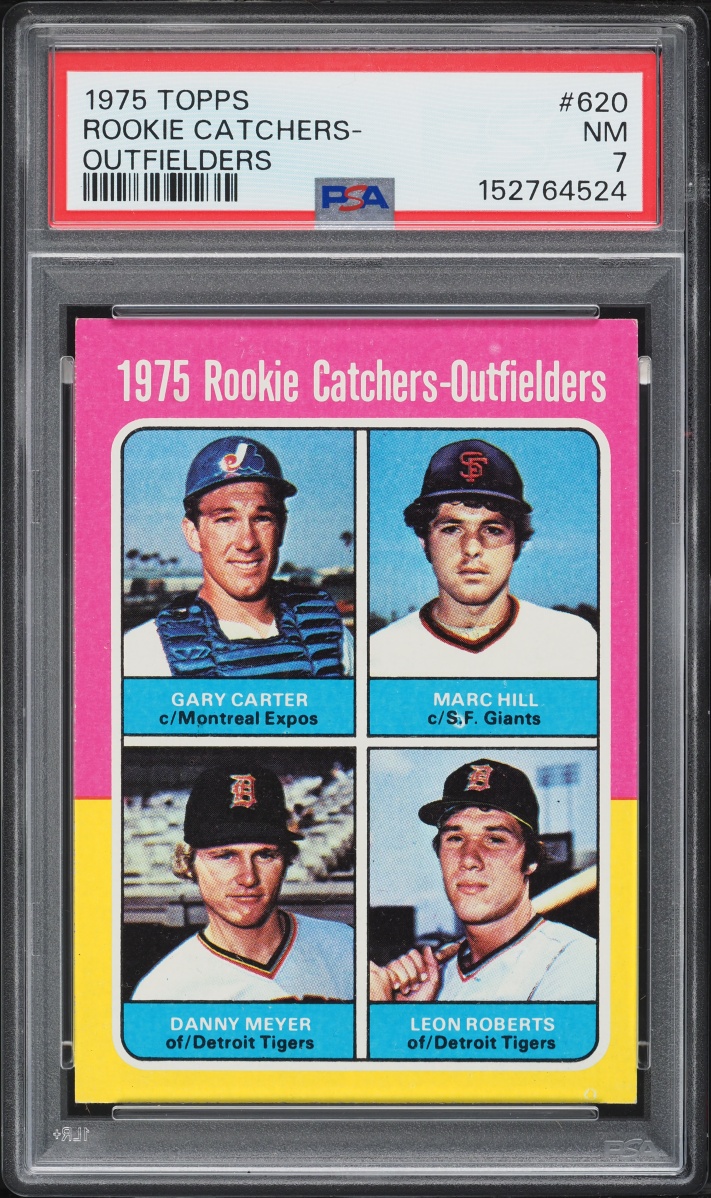
Gary Carter · Rookie Catchers-Outfielders #620 1975 Topps · Rookie Catchers-Outfielders
Rookie card · Multi-player#620NM 7

Gary Carter · Rookie Catchers-Outfielders

1975 Topps · Rookie Catchers-Outfielders

Gary Carter's rookie card appears in the set's multi-player Rookies subset. Carter became one of baseball's most respected catchers and earned Hall of Fame induction following a career highlighted by his defense, leadership and offensive production.

His #620 card is shared with Marc Hill, Danny Meyer and Leon Roberts, so the Rookie Catchers-Outfielders version is a four-player entry.

Because Carter shares the card with other players, verify the card number and exact version when researching listings or comparing graded examples.

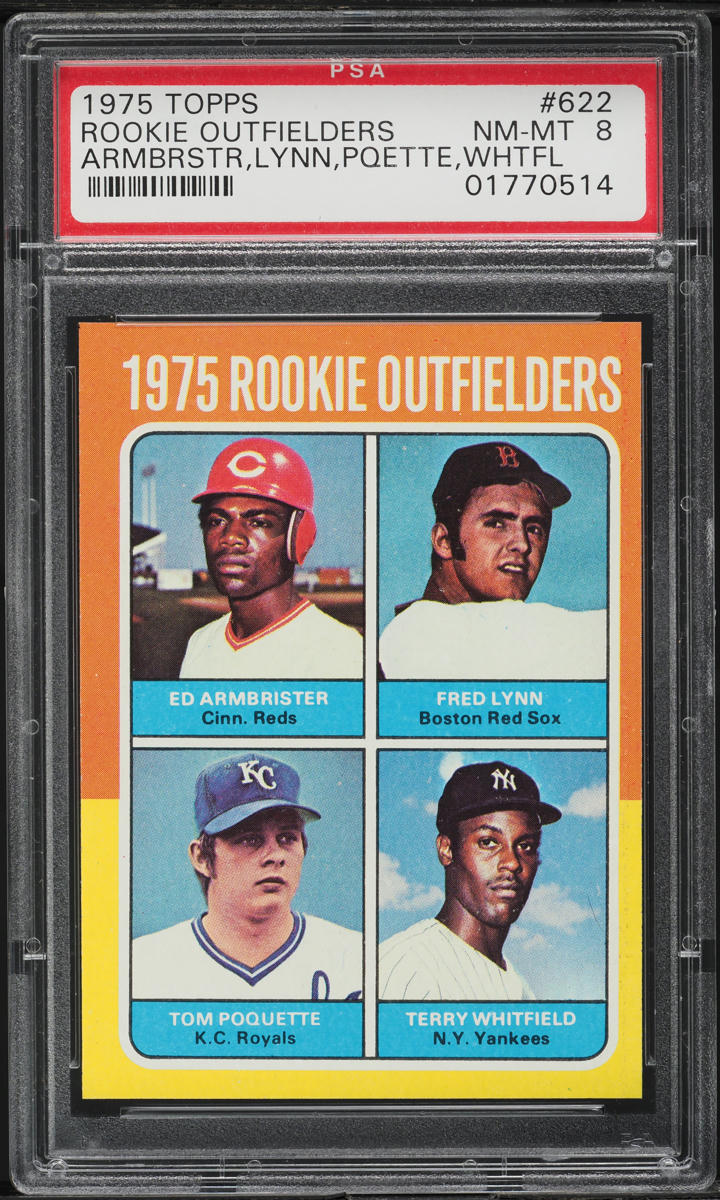
Fred Lynn · Rookie Outfielders #622 1975 Topps · Rookie Outfielders
Rookie card · Multi-player#622NM-MT 8

Fred Lynn · Rookie Outfielders

1975 Topps · Rookie Outfielders

Fred Lynn made an immediate impact with the Boston Red Sox, turning his rookie season into one of the most celebrated debuts of the decade.

His #622 Rookie Outfielders card pairs him with Ed Armbrister, Tom Poquette and Terry Whitfield, another example of the depth the Rookies subset gives the 1975 checklist.

Lynn's card offers collectors a route to a major 1975 rookie name without limiting a collection to the two solo rookie cards.

Bookends, legends and the Rookies subset

Hank Aaron and the depth of the rookie class

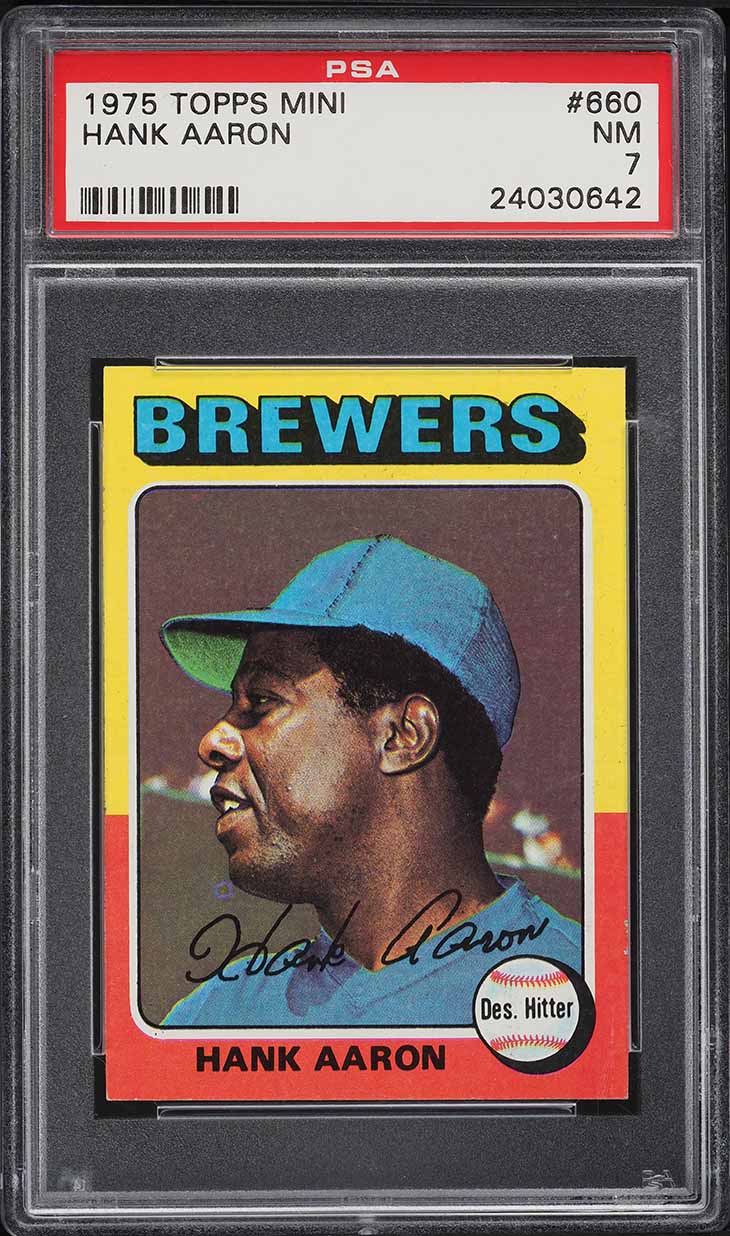
Hank Aaron appears at both ends of the set, creating one of its most memorable collecting details. Card #1 is a 1974 Highlights card commemorating his historic achievement of breaking Babe Ruth's career home-run record, and card #660 is his regular-issue card, collected here as a 1975 Topps Mini. Keith Hernandez rounds out the multi-player Rookies entries, while the MVP subset revisits past seasons and brings retired legends into the 1975 release.

Hank Aaron · Bookend card #660 card
#660NM 7

Hank Aaron · Bookend card

The closing card of the checklist, shown here in its 1975 Topps Mini form. Paired with card #1, it makes Aaron the opening and closing presence in the set: one card captures a defining moment in baseball history, the other completes the set with one of the sport's all-time greats.

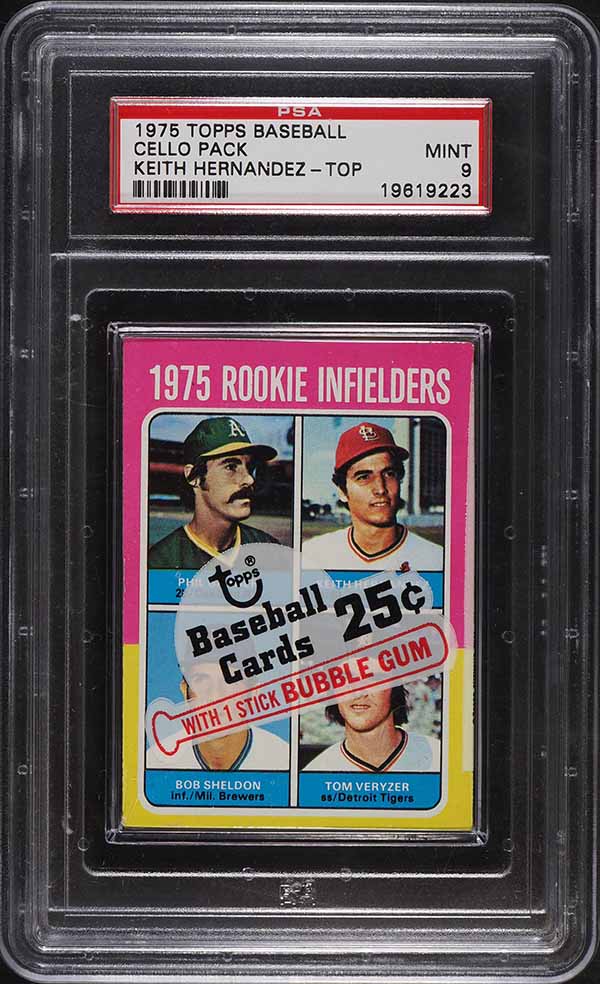
Keith Hernandez · Cello pack  card
MINT 9

Keith Hernandez · Cello pack

Hernandez shares a Rookie Infielders card inside this surviving 1975 Topps cello pack, where his card sits on top. He became known for his hitting, defensive excellence and long career with the St. Louis Cardinals and New York Mets. Together with Lynn, Carter and Rice, these cards give the 1975 checklist unusual depth for collectors interested in the rookie cards of future stars and Hall of Famers.

Veteran stars

Established names across the checklist

The set also includes veteran stars such as Brooks Robinson, Frank Robinson, Harmon Killebrew and Lou Brock, alongside early cards of players including Mike Schmidt and Dave Winfield. This mix of legends, established stars and important rookies gives the checklist broad appeal.

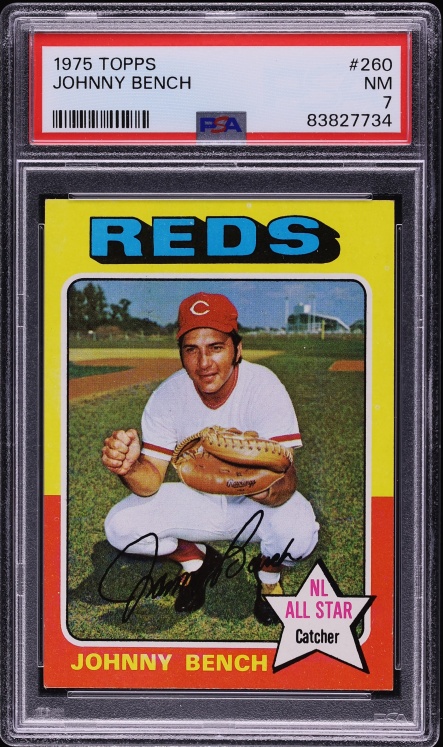
Johnny Bench #260 card
#260NM 7

Johnny Bench

An All-Star catcher card of the Reds' centerpiece, shown here with the National League All-Star star badge on the lower right.

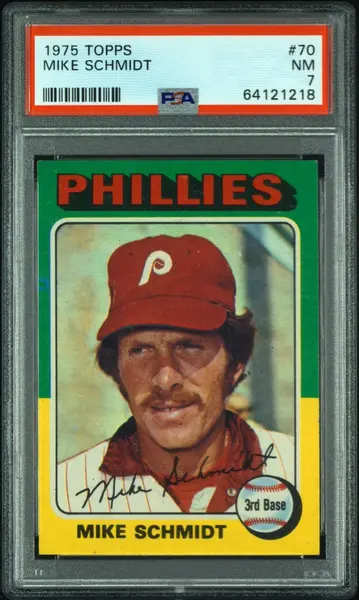
Mike Schmidt #70 card
#70NM 7

Mike Schmidt

An early card of the Phillies third baseman, issued before his run as one of the game's dominant power hitters.

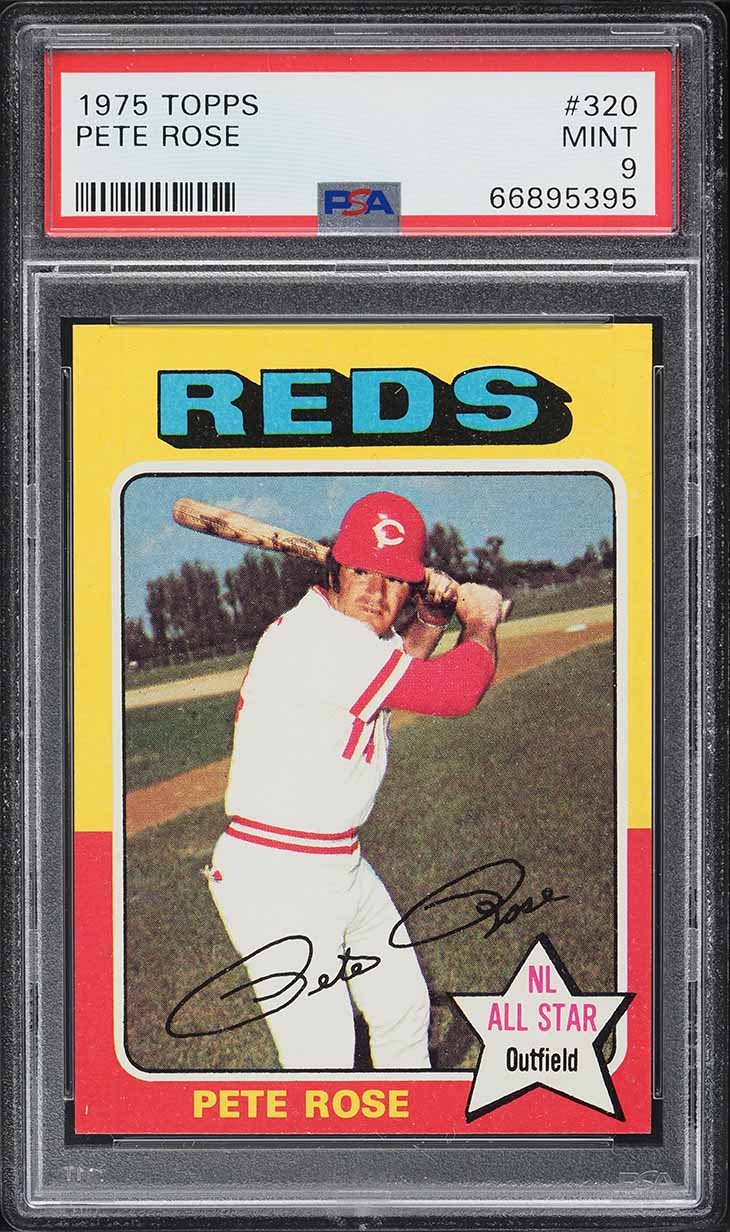
Pete Rose #320 card
#320MINT 9

Pete Rose

An All-Star outfield card of the Reds' hit leader in the middle of his career.

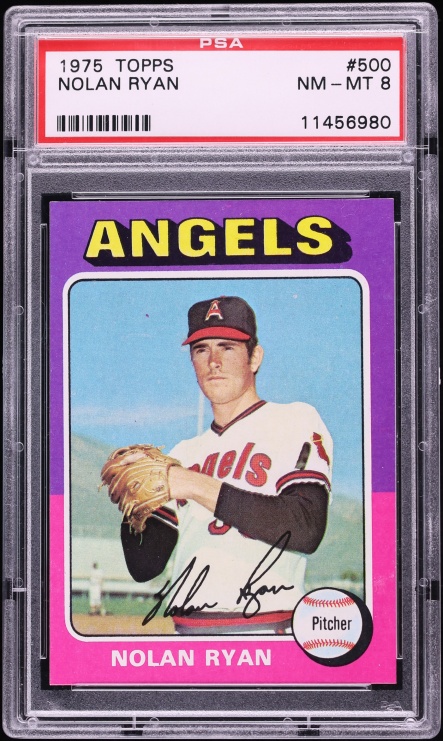
Nolan Ryan #500 card
#500NM-MT 8

Nolan Ryan

A high-number Angels card from the season before his move to California's rotation peak.

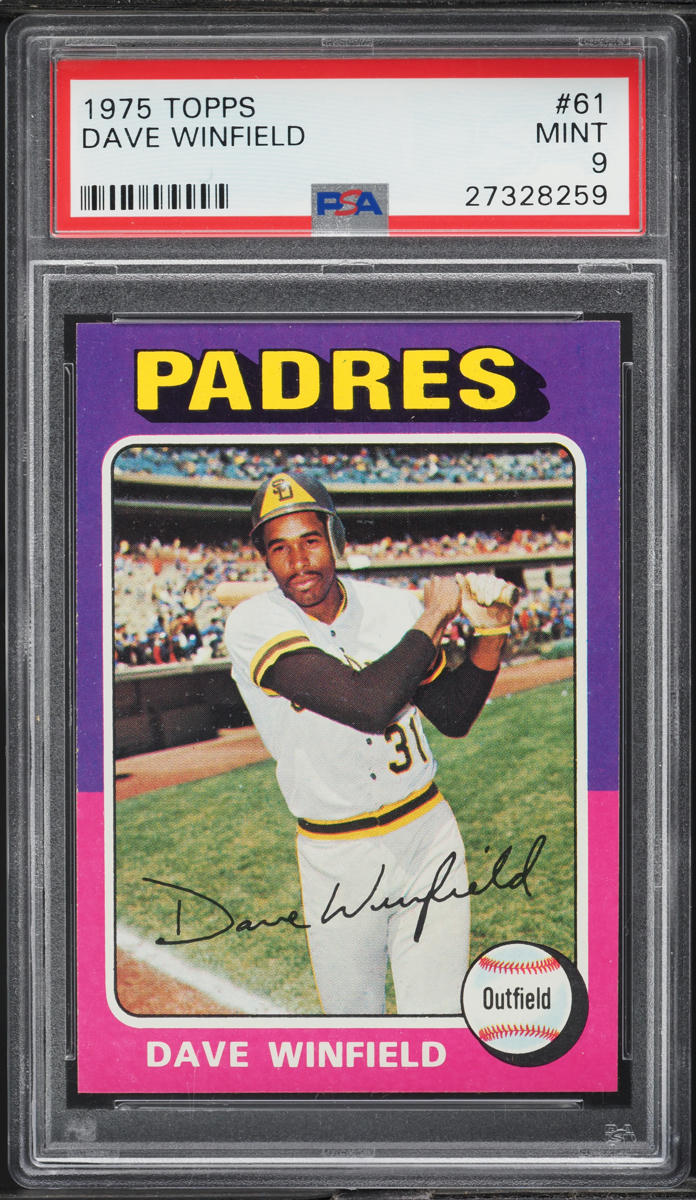
Dave Winfield #61 card
#61MINT 9

Dave Winfield

An early Padres card of a player who became one of the era's most complete outfielders.

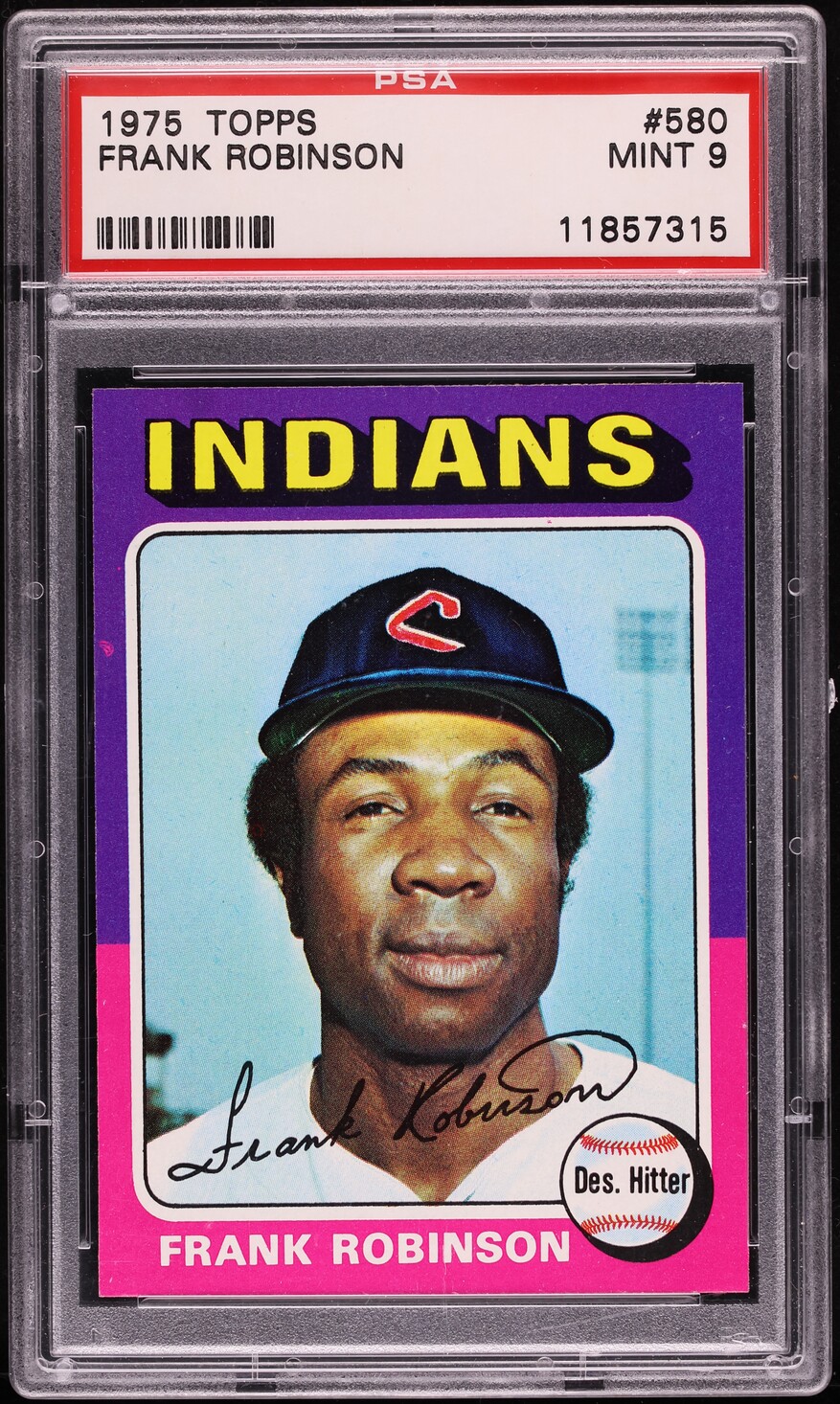
Frank Robinson #580 card
#580MINT 9

Frank Robinson

A late-career Indians card for a Hall of Famer who finished his playing days as a designated hitter.

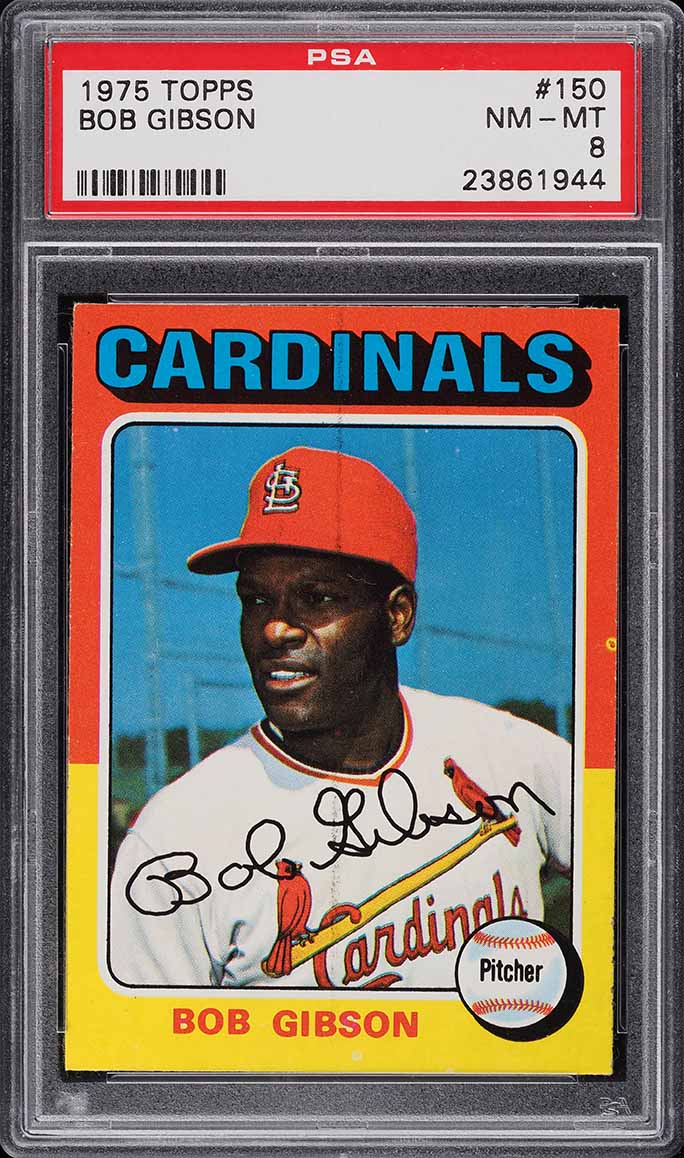
Bob Gibson #150 card
#150NM-MT 8

Bob Gibson

The Cardinals ace in his final season, closing out one of the great pitching careers of the era.

The MVP subset

League MVPs from 1951 through 1974

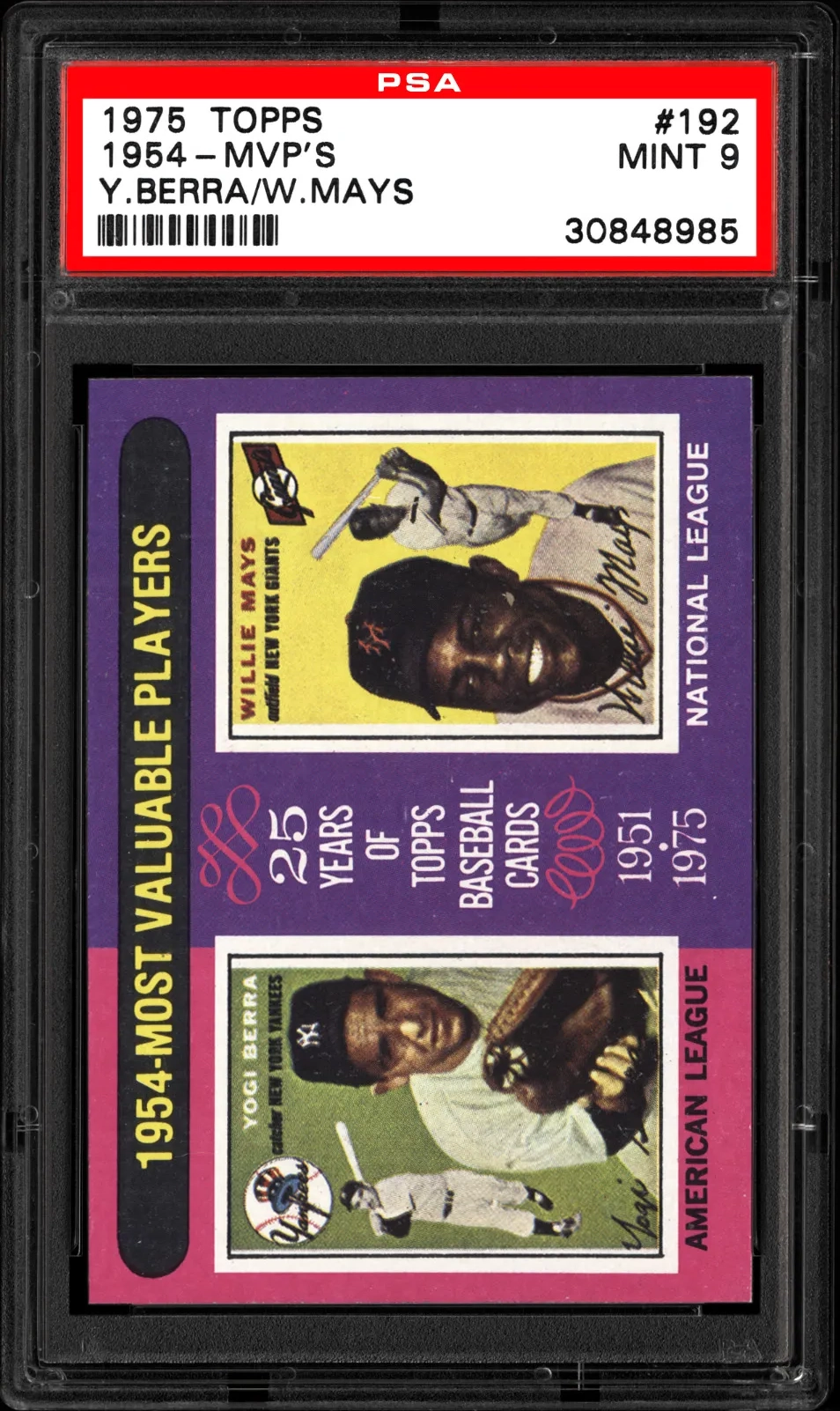
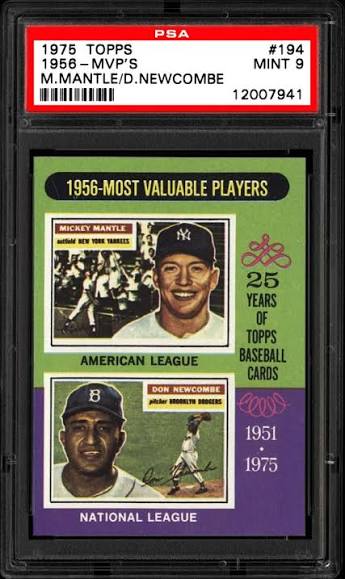
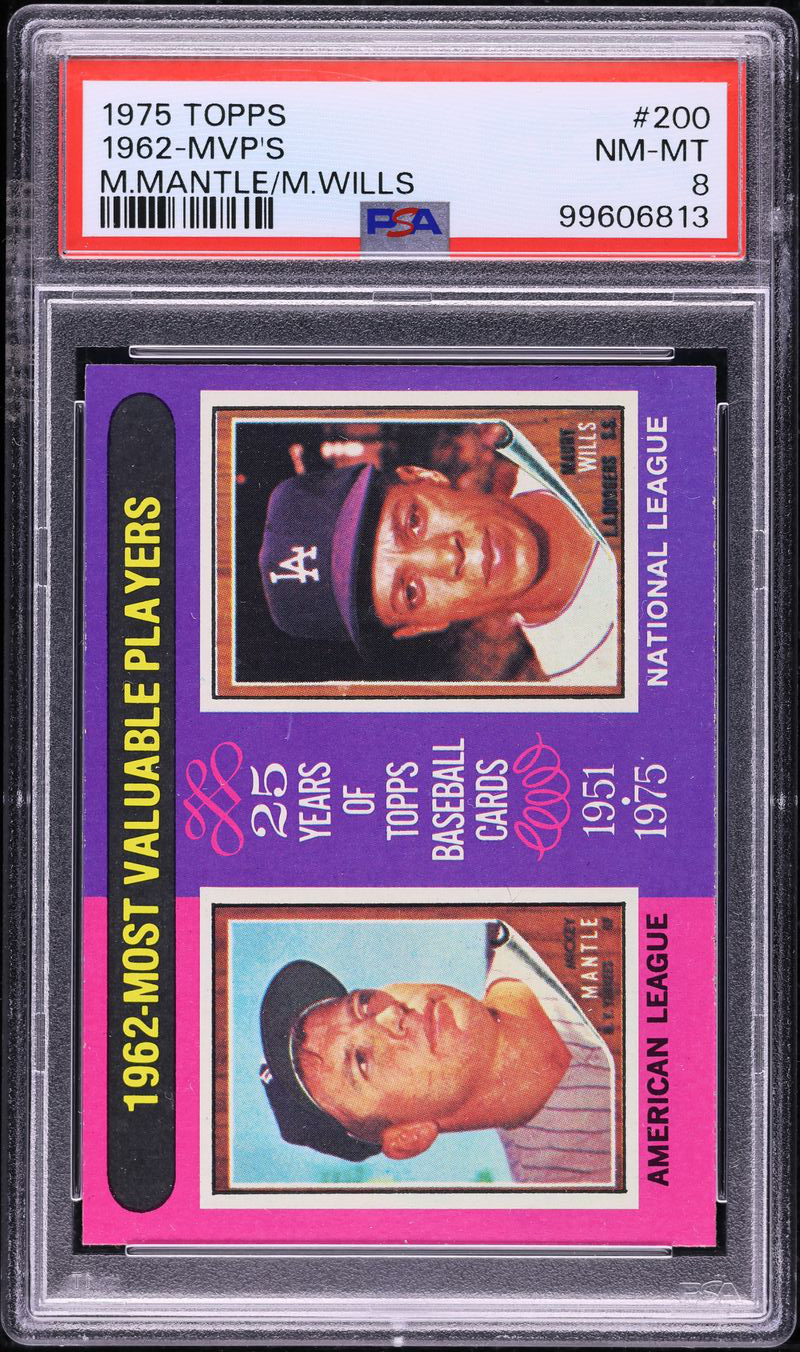
Cards #189 through #212 make up the set's MVP subset, pairing the league MVPs from 1951 through 1974. Rather than ordinary current-player cards, these entries revisit past seasons and bring several legendary players into the 1975 release.

1954 MVPs · Mays & Berra #192 card
#192MINT 9

1954 MVPs · Mays & Berra

Willie Mays and Yogi Berra share the 1954 Most Valuable Players card, pairing the National League and American League winners.

1956 MVPs · Mantle & Newcombe #194 card
#194MINT 9

1956 MVPs · Mantle & Newcombe

Mickey Mantle and Don Newcombe share the 1956 card, matching the Yankees outfielder with the Dodgers pitcher.

1962 MVPs · Mantle & Wills #200 card
#200NM-MT 8

1962 MVPs · Mantle & Wills

Mickey Mantle and Maury Wills share the 1962 card, one of several MVP pairings built around the same era's biggest names.

Why the subset matters

Mickey Mantle and Willie Mays are among the major names that make this subset distinctive. The cards connect collectors with earlier eras of baseball and the history of Topps itself, and they carry a premium over most of the base checklist.

The smaller version

The 1975 Topps Mini set

Topps also issued a Mini version with the same 660-card checklist. The Mini cards measure 2¼ by 3⅛ inches, making them smaller than the standard cards. They were distributed regionally, including in Michigan and the western United States.

The Mini set is a separate collecting target, not simply a smaller card format to overlook when researching a listing. Its dimensions and regional distribution make it important to confirm which version you're buying.

Collectors pursuing Brett, Yount or another key player should check the card's dimensions and labeling carefully. Standard and Mini examples can look similar in online photos, but they belong to different versions of the set and should be evaluated separately.

Checklist

660 cards

Mini size

2¼ × 3⅛ in

Distribution

Regional

Sold separately

Yes

How to tell them apart

Standard vs. Mini

Both versions use the same checklist and design, so the difference comes down to size, distribution and how the card is labeled.

Standard

  • Measures 2½ by 3½ inches
  • Sold nationally in packs
  • The default version for most set builds
  • Graded as "1975 Topps" on the label

Mini

  • Measures 2¼ by 3⅛ inches
  • Distributed regionally, including Michigan and the western U.S.
  • Its own collecting target with its own values
  • Graded as "1975 Topps Mini" on the label

Before comparing prices, confirm which version you're looking at. A slab label, seller description or a ruler will settle it faster than an online photo.

What moves the price

What affects 1975 Topps Baseball card values?

Player and rookie-card significance: Brett and Yount are major targets, while Carter, Rice, Lynn and Hernandez add depth to the rookie checklist.

Grade and eye appeal: centering, corners, edges and surface quality can make a substantial difference.

Standard versus Mini: confirm the version before comparing prices. These are separate products with different dimensions.

Card-specific demand: Hank Aaron's #1 and #660 cards, the MVP subset and key rookie cards attract different kinds of collectors.

Recent completed sales: compare the same card, version and grade. Asking prices alone do not show what buyers have actually paid.

For graded cards, use the PSA label to verify the exact card and grade, then review recent sales for comparable examples. For raw cards, inspect the card carefully and avoid assuming that a clean photograph guarantees strong condition.

Condition challenges

Why condition is a big part of collecting 1975 Topps

Colored-border chipping: small chips and worn edges stand out against the vivid borders.

Centering: cards can have noticeable shifts or tilts, which are particularly apparent within the framed design.

Print defects: spots, ink marks and other printing flaws can interrupt the clean look of the card front.

Corners and edges: wear can be easy to spot against the contrasting colors, even when the rest of the card looks attractive.

Surface condition: scratches, stains and other flaws can affect eye appeal and grading potential.

These issues mean that two copies of the same card can look quite different in person. A lower-grade card may still be an appealing choice for a player collection, while collectors pursuing high-grade examples need to examine centering, edges and print quality closely.

Collecting tips

Building the set

If you're building a 1975 Topps collection, decide whether your goal is the complete 660-card set, the key rookie cards, the MVP subset or a player-focused collection.

A focused collection built around Brett and Yount is a natural starting point. From there, add the multi-player rookie cards, Hank Aaron's bookends and the veteran stars that make the set historically rich.

If you're working toward the complete set, remember that the release was issued in one series. You can build the checklist without having to track down a separate high-number series, although finding clean examples across all 660 cards still takes patience.

Consider whether you want standard-size cards, Minis or a combination of both. Keep the versions separate in your checklist and when researching prices. Most importantly, buy the card you can verify, not just the one that looks best in a listing photo.

Why 1975 Topps Baseball belongs on a collector's checklist

The 1975 Topps Baseball set brings together a memorable design, a deep group of rookie cards and a strong lineup of stars from different eras. George Brett and Robin Yount headline the rookie checklist, while Gary Carter, Jim Rice, Fred Lynn and Keith Hernandez add even more depth. Hank Aaron's bookend cards and the MVP subset give the set a strong historical connection to the game's past.

Its colorful borders also make condition part of the collecting experience. Clean, well-centered examples can be difficult to find, giving collectors a reason to look closely at each card rather than treating every copy as interchangeable.

Whether you're chasing key rookies, revisiting baseball's greats or working toward all 660 cards, 1975 Topps remains one of the defining vintage sets of the decade.

We use cookies

Players Invest uses essential cookies to run the site, plus analytics and advertising cookies to understand how visitors use it and to measure our marketing. You can accept or decline the non-essential ones. Privacy Policy