Archive set
MLB · 1979Vintage Set Guide

Ozzie Smith's rookie, a Prospects redesign and the decade's toughest grades

1979 Topps Baseball: The Ozzie Smith Rookie and a Set Built on Tough Grades

A landmark late-1970s set featuring the Ozzie Smith rookie, a team-based Prospects redesign, iconic stars and some of the toughest condition-sensitive cards of the decade.

The 1979 Topps Baseball set consists of 726 cards and is remembered for its clean design, strong lineup of Hall of Famers and notoriously difficult high-grade condition. The set's biggest attraction is card #116, the rookie card of Hall of Fame shortstop Ozzie Smith. It also includes rookie cards of Bob Welch, Bob Horner, Pedro Guerrero, Carney Lansford and Willie Wilson.

The design marked a shift from the more portrait-heavy look of 1978, with larger color photographs and more action shots of the game's biggest stars. A simple white border frames each card, while a colored banner along the bottom displays the player's name and team. A small white baseball featuring the Topps logo sits in the lower-left corner.

The 1979 release also introduced a different approach to rookie cards. Rather than grouping players by position, Topps organized its Prospects cards by team, featuring three black-and-white headshots on each card. The set also includes League Leaders, Record Breakers, Major League Records and an All-Time Record Holders subset featuring baseball legends.

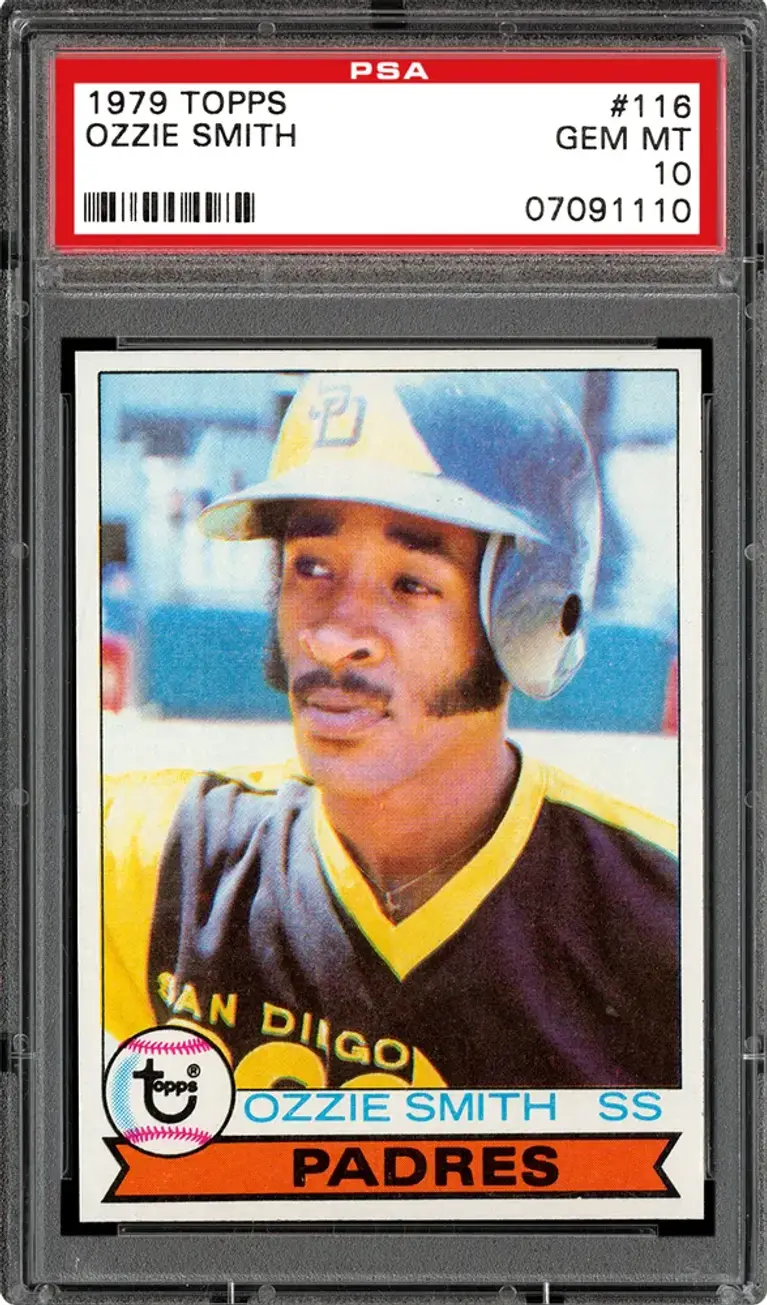
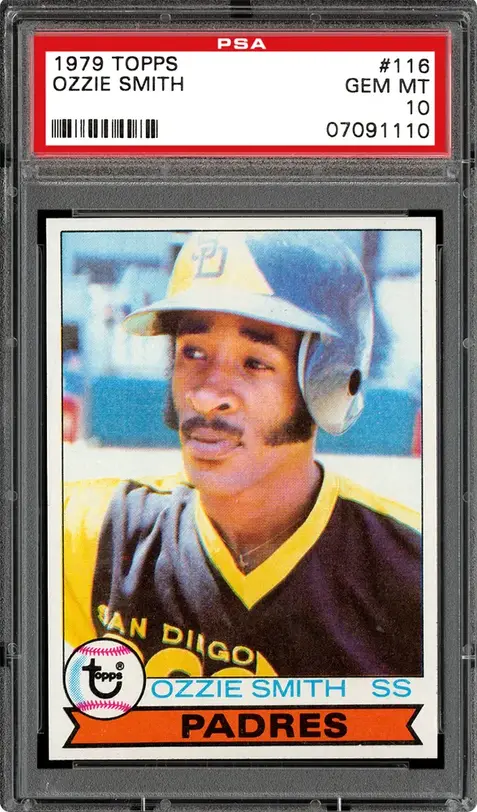
Ozzie Smith #116 · 1979 Topps · PSA GEM MT 10

Free portfolio

Follow the players in this set.

Build your free portfolio to track their Athlete Brand Scores, card sales and market momentum every day.

Browse athletes

Set overview

Inside the 1979 Topps Baseball set

Topps released the 1979 set as a single series of 726 cards, each measuring 2½ by 3½ inches. A white border frames a large color photograph, and a colored banner along the bottom carries the player's name and team, with the Topps baseball logo tucked into the lower-left corner.

The photography is the reason the set feels different from 1978. Topps leaned harder into action shots and larger images of the game's biggest stars, so the fronts read more like a season in motion than a set of studio portraits.

The checklist mixes the standard player cards with League Leaders, Record Breakers, Major League Records, an All-Time Record Holders run and a redesigned Prospects subset that groups three players from the same organization on each card.

Card #369 makes the set a variation chase as well: Bump Wills was printed with a Toronto Blue Jays banner before the trade that would have sent him there fell through, and the corrected card shows him with the Texas Rangers.

Total cards

726

Key rookie

Ozzie Smith

Card size

2½" × 3½"

Distribution

Single series

Set details

The 1979 Topps release at a glance

Every production detail behind the set, from the single-series print run to the team-based Prospects cards.

Manufacturer
Topps
Release Year
1979
Sport
Baseball
Total Cards
726
Card Size
2½" x 3½"
Series
Single series
Rookie Card Highlight
Ozzie Smith #116
Notable Variation
Bump Wills #369
Printing
132-card sheets, with 66 double-printed cards
Design
White borders, large color photos, colored name and team banner
Subsets
League Leaders, Record Breakers, Major League Records, All-Time Record Holders and Prospects

The rookie card collectors chase

Ozzie Smith #116 headlines the class

The Wizard of Oz is the reason most collectors open a 1979 pack, but the set carries a deeper rookie class behind him: Bob Welch, Bob Horner, Pedro Guerrero, Carney Lansford and Willie Wilson all debut here.

Ozzie Smith #116 1979 Topps
Rookie card · Hall of Famer#116GEM MT 10

Ozzie Smith

1979 Topps

Ozzie Smith's 1979 Topps rookie card is the defining card of the set. The future Hall of Fame shortstop became known as the Wizard of Oz for his extraordinary defensive skills, and this is his key rookie card in the flagship Topps release.

Finding a well-centered example is a major challenge. The card is notorious for poor top-to-bottom centering, fuzzy photography and print defects. Historical PSA population data cited in hobby coverage showed that only a small percentage of submitted examples reached PSA 9 or better.

That condition sensitivity is a major part of the card's appeal. While the Ozzie Smith rookie is the set's headline collectible, finding one with strong centering, clean surfaces and sharp corners makes the hunt considerably more challenging.

Shown here in a GEM MT 10 slab, the grade that defines the top of the market for this card. Check top-to-bottom centering first: it is the flaw that keeps most copies out of the high grades.
Hall of Famers and key veteran cards

The star checklist behind the rookie

The 1979 checklist carries more than 20 Hall of Famers. These are the cards set builders reach for first once the Ozzie Smith rookie is in hand.

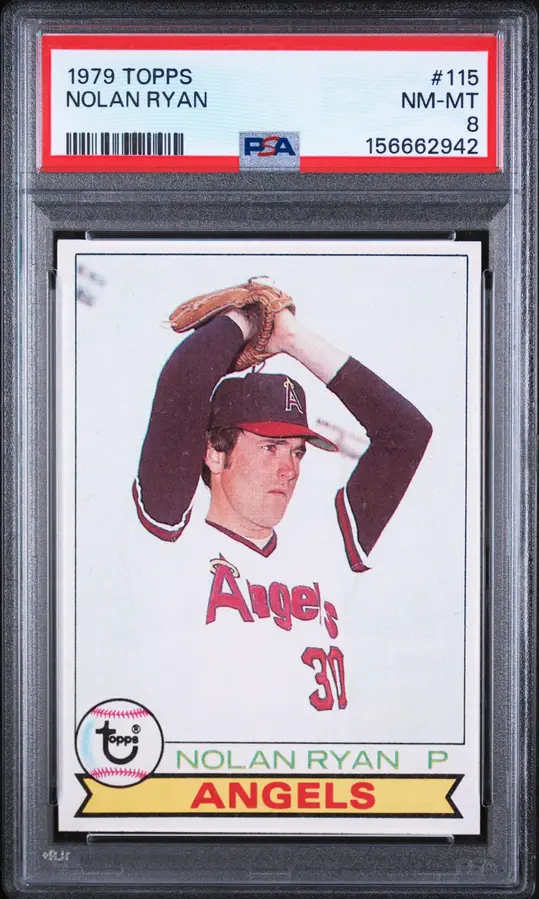
#115

Nolan Ryan

California Angels star and one of the era's most recognizable pitchers.

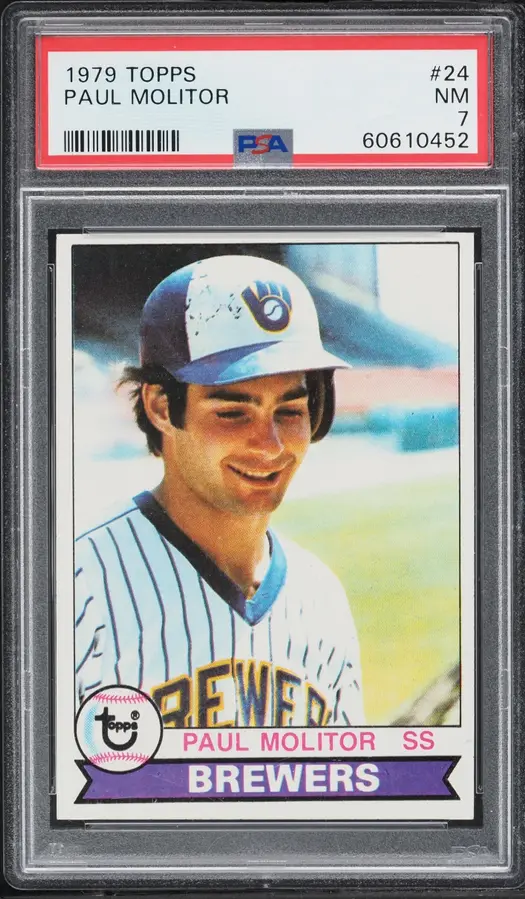
#24

Paul Molitor

Early solo card of the future Hall of Famer.

#55

Willie Stargell

Hall of Fame star and 1979 National League Co-MVP.

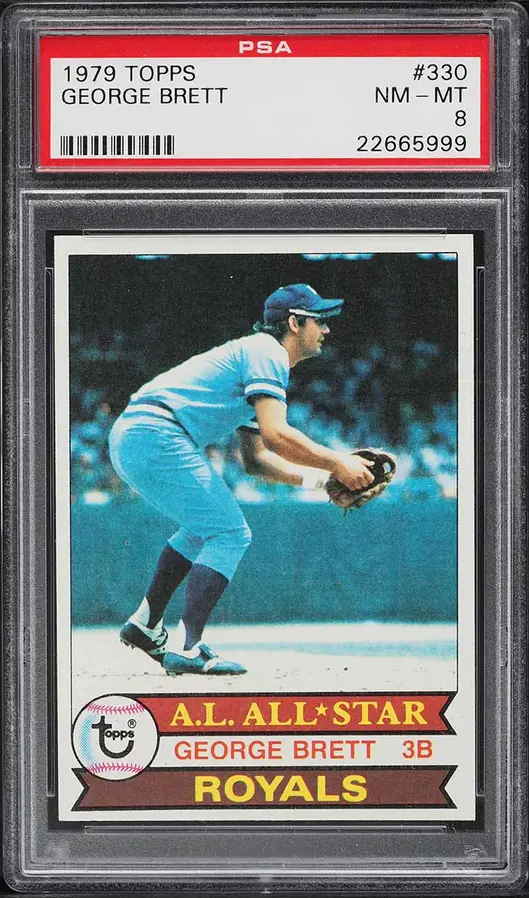
#330

George Brett

Key Hall of Fame star card of the Kansas City Royals third baseman.

#650

Pete Rose

First Topps card showing Rose in a Phillies uniform.

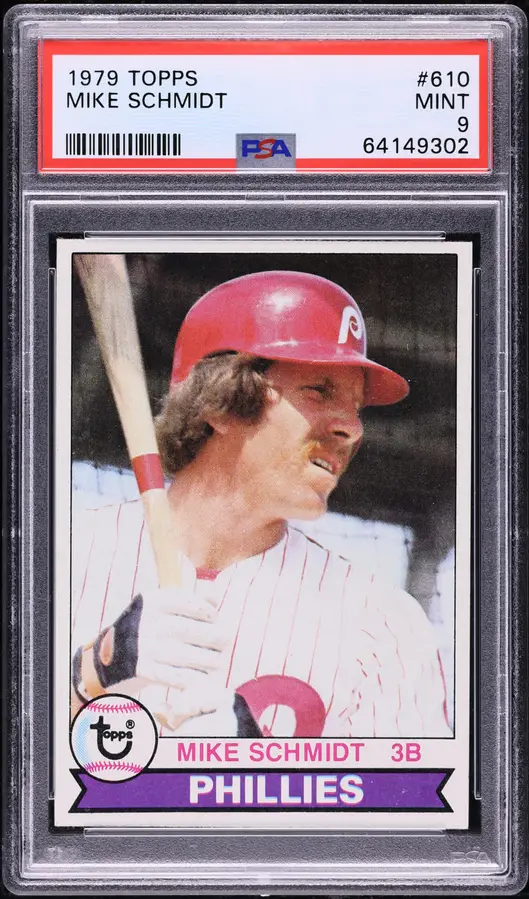
#610

Mike Schmidt

Important card of the Philadelphia Phillies slugger.

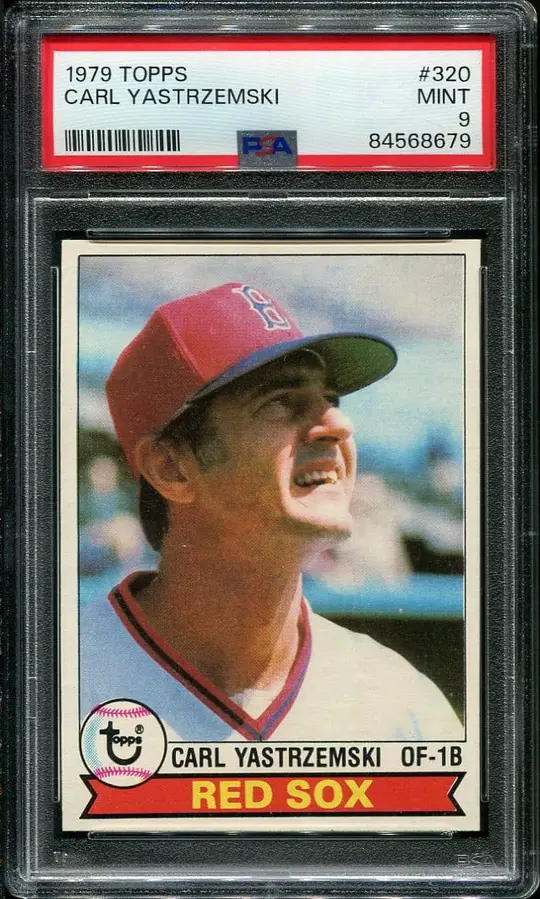
#320

Carl Yastrzemski

Hall of Fame Boston Red Sox star.

#30

Dave Winfield

Hall of Fame outfielder and another condition-sensitive card.

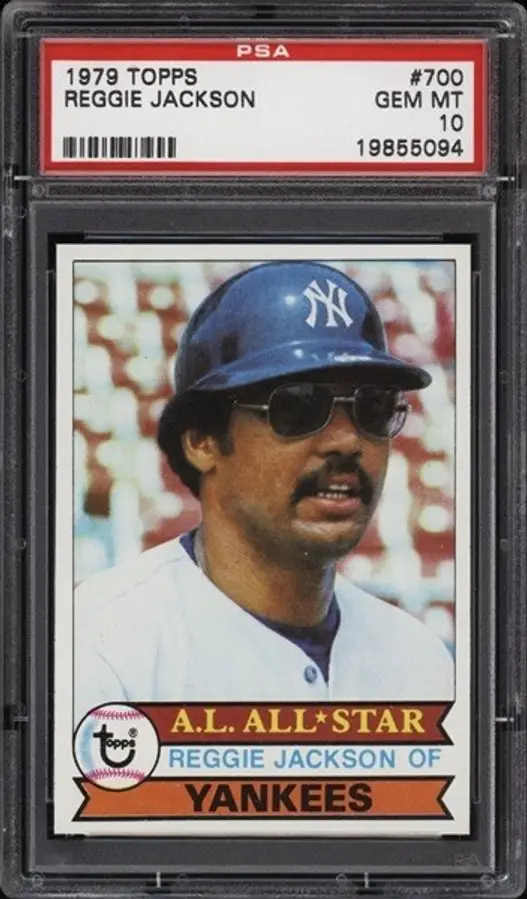
#700

Reggie Jackson

Set-closing card featuring the Hall of Fame slugger.

Key cards up close

The stars that carry the set

Ozzie Smith's #116 has its own section below. Around it sit the cards set builders hunt hardest, from Ryan and Brett to the Hall of Famers whose 1979 cards are far tougher in high grade than their checklists suggest.

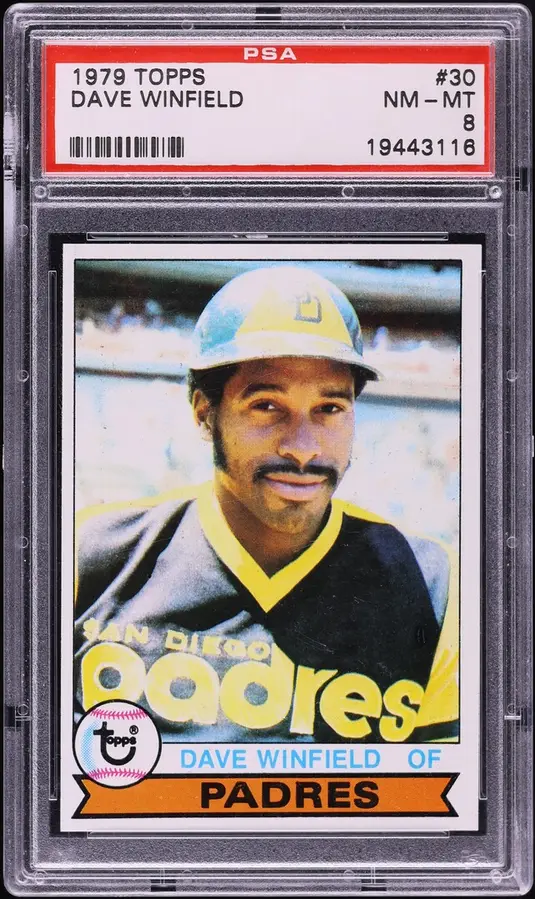
Dave Winfield #30 card
#30NM-MT 8

Dave Winfield

Hall of Fame outfielder and another condition-sensitive card, shown in the Padres yellow and brown with the orange team banner.

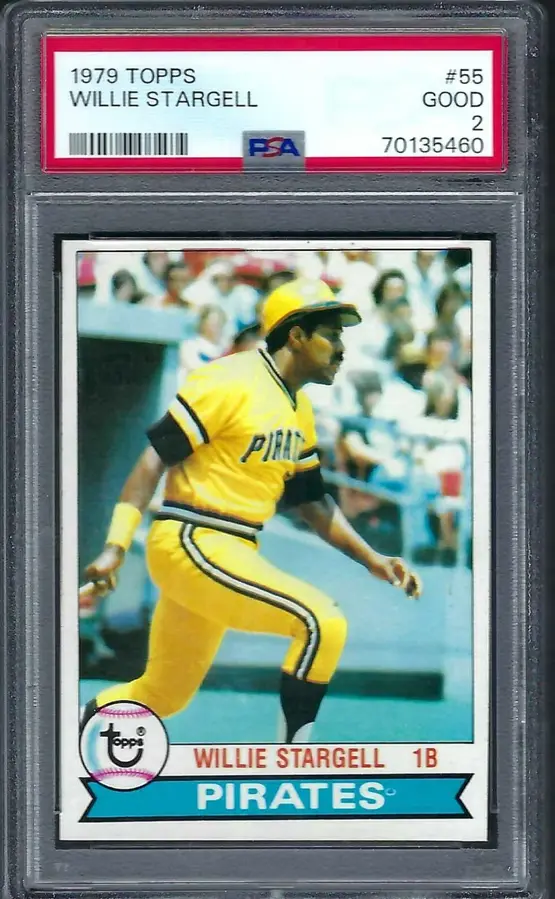
Willie Stargell #55 card
#55GOOD 2

Willie Stargell

The 1979 National League Co-MVP in Pirates yellow. A low-grade copy like this one is how most of the set's stars actually survive.

Nolan Ryan #115 card
#115NM-MT 8

Nolan Ryan

The California Angels ace mid-windup, one of the most recognizable pitchers of the era and a key card of the set.

Carl Yastrzemski #320 card
#320MINT 9

Carl Yastrzemski

The Red Sox legend on the red team banner, a Hall of Fame star card that is genuinely scarce in mint condition.

George Brett #330 card
#330NM-MT 8

George Brett

Brett fielding in Royals blue, a key Hall of Fame star card in the middle of the checklist.

Mike Schmidt #610 card
#610MINT 9

Mike Schmidt

The Phillies slugger with the bat on his shoulder, an important card of the era's premier third baseman.

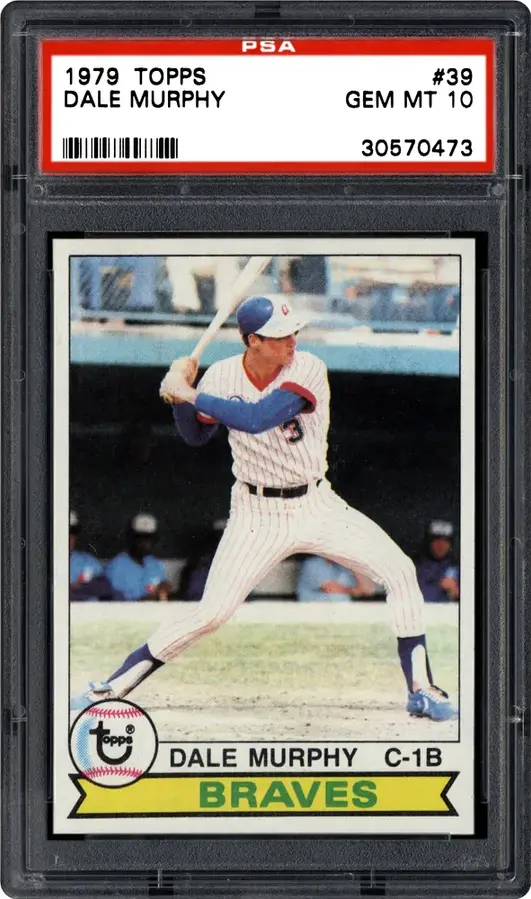
Dale Murphy #39 card
#39GEM MT 10

Dale Murphy

Murphy mid-swing in Braves pinstripes, still listed as a catcher-first baseman two seasons before he moved to the outfield and became a two-time NL MVP.

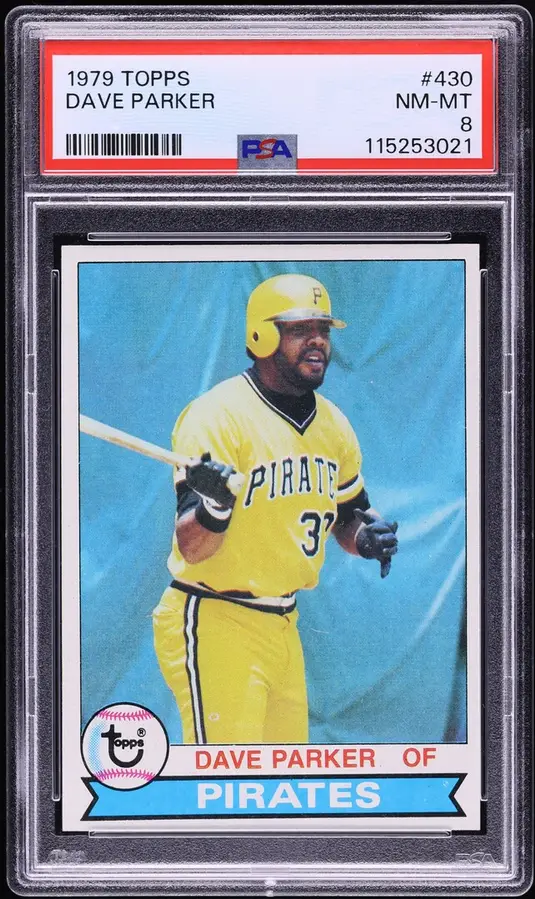
Dave Parker #430 card
#430NM-MT 8

Dave Parker

The reigning National League MVP in Pirates yellow, with the bright blue team banner and the bat on his shoulder.

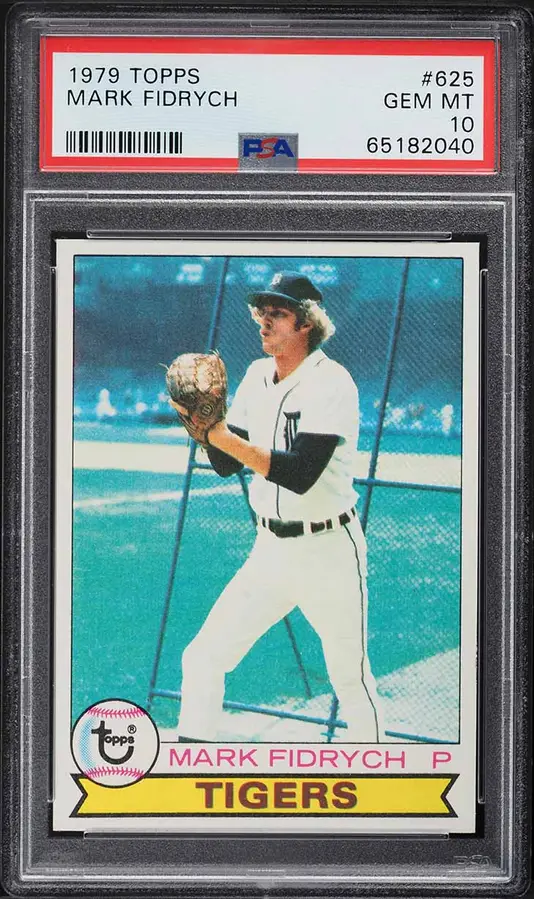
Mark Fidrych #625 card
#625GEM MT 10

Mark Fidrych

The Bird, three seasons after his national rookie summer, on the Tigers banner. Arm trouble had already cut into his workload, which is why his cards stayed popular with so few of them.

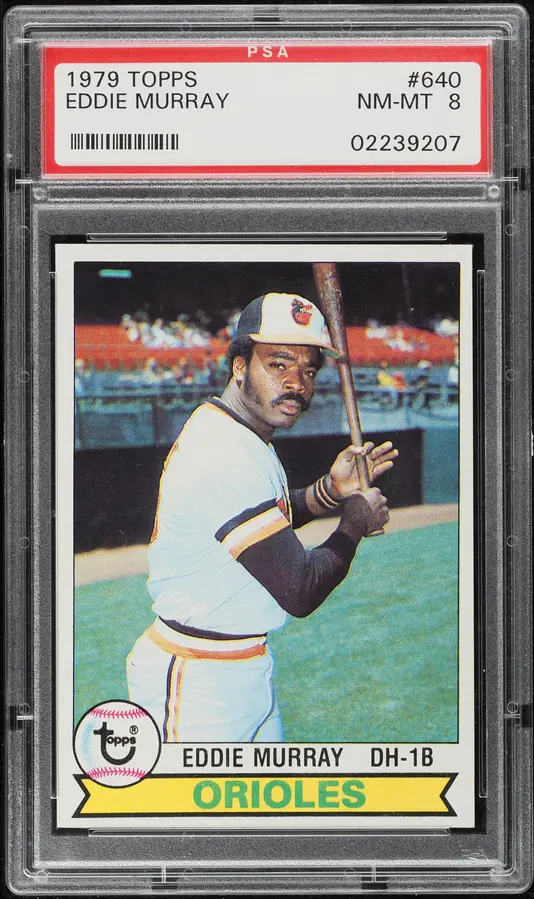
Eddie Murray #640 card
#640NM-MT 8

Eddie Murray

The Orioles' young switch-hitting first baseman, already an All-Star and two years from the first of eight straight 100-RBI seasons, on the yellow Baltimore banner.

Reggie Jackson #700 card
#700GEM MT 10

Reggie Jackson

The set's closing card, #700, carrying the A.L. All-Star banner: Reggie in Yankees pinstripes and sunglasses two years after his three-homer World Series.

Paul Molitor #24 card
#24NM 7

Paul Molitor

An early solo card of the future Hall of Famer, early in the checklist and easy to overlook.

One card, two grades

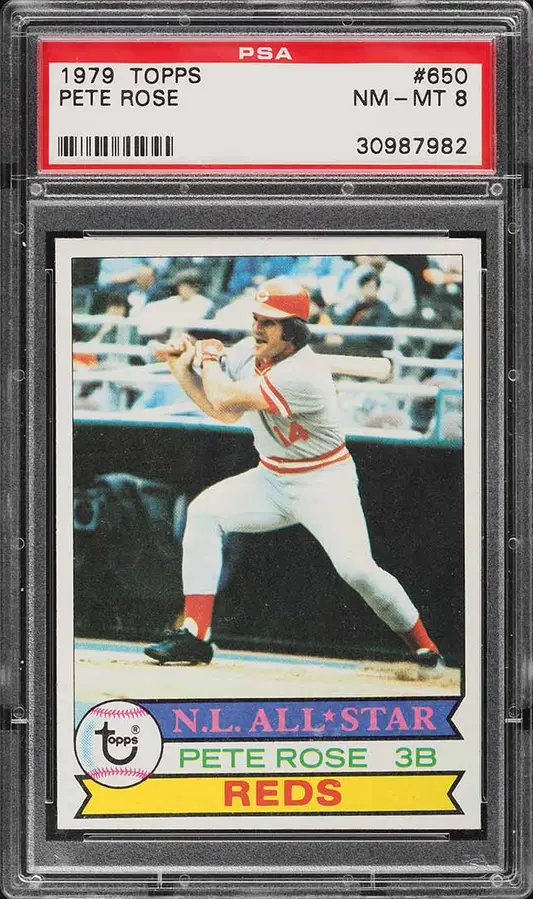
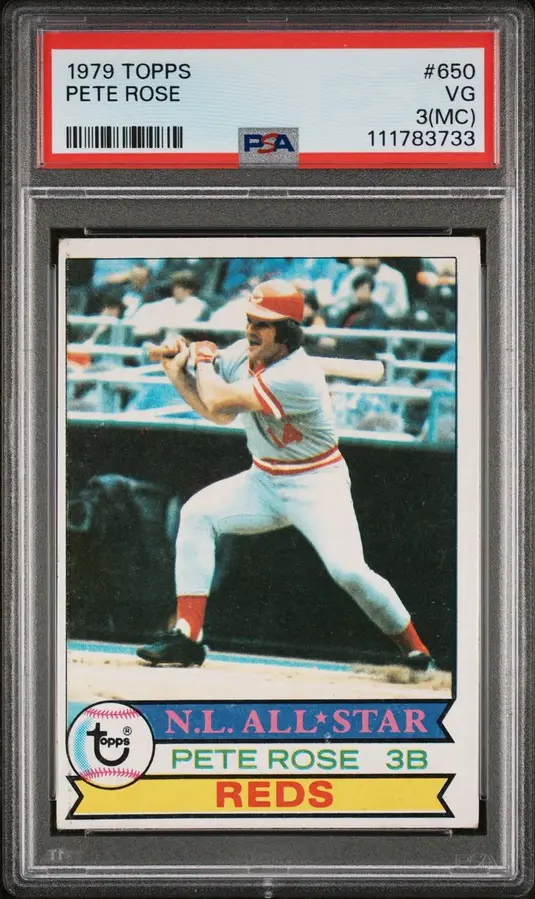
Pete Rose #650 and the condition reality of 1979

The same card, two slabs. Rose's first Topps card in a Phillies uniform shows exactly why this set is so hard in high grade: the difference between a collector-grade copy and a sharp one is enormous.

Pete Rose #650 · PSA 8 card
#650 · PSA 8NM-MT 8

Pete Rose

A sharp copy with strong color and clean borders, the grade most collectors settle on for the key stars.

Pete Rose #650 · PSA 3 (MC) card
#650 · PSA 3 (MC)VG 3

Pete Rose

The same card with the mis-cut qualifier. Off-center cuts and production flaws are the norm, not the exception, in this set.

Why the grade gap matters

Rose #650 is the first Topps card to show him in a Phillies uniform, and it is one of the most collected cards in the checklist. It is also a useful measuring stick: the spread between a mid-grade copy and a NM-MT example is far wider here than in a modern set, because so few 1979 cards were printed and stored cleanly.

Subsets that tell a bigger story

Prospects by team, record breakers and all-time greats

Prospects #701–726: the set's most distinctive change. Rather than grouping rookies by position, Topps organized these cards by team, with three black-and-white headshots on each card. The subset closes the checklist and gave the decade a new way to present young players.

League Leaders: the statistical leaders of 1978, grouped by category.

Record Breakers and Major League Records: single cards and short runs celebrating marks set during the 1978 season.

All-Time Record Holders: a standout subset featuring legends such as Ty Cobb, Cy Young and Walter Johnson, celebrating records that connect generations of the game.

Prospects

#701–726

Double prints

66 cards

Print sheets

132 cards

Hall of Famers

20+

Condition and tough commons

Why high-grade 1979 Topps cards are so hard to find

The 1979 set is notorious for off-center cuts, print lines, roller marks, smudged team banners and softer card stock. Even seemingly ordinary cards can be difficult to find in premium condition.

Marc Hill #11 is especially difficult to find without a smudged team banner. Jerry Turner #564 and Ken Landreaux #619 are also known for recurring production issues.

Those cards make completing the set in high grade a serious challenge beyond simply finding the star players. The stars are the expensive part; the tough commons are the part that stops a graded set from ever finishing.

Bump Wills #369 adds a variation to the hunt. The card was initially printed with a Toronto Blue Jays team banner based on an expected trade that never happened, and the corrected version identifies Wills with the Texas Rangers. The Rangers version is believed to account for roughly 10% of the print run, making it the scarcer variation.

Crown jewel

The #116 Ozzie Smith rookie, the centerpiece of the set

Ozzie Smith #116 · 1979 Topps · PSA GEM MT 10

Ozzie Smith's 1979 Topps rookie card is the defining card of the set. The future Hall of Fame shortstop became known as the Wizard of Oz for his extraordinary defensive skills, and this is his key rookie card in the flagship Topps release.

Finding a well-centered example is a major challenge. The card is notorious for poor top-to-bottom centering, fuzzy photography and print defects. Historical PSA population data cited in hobby coverage showed that only a small percentage of submitted examples reached PSA 9 or better.

That condition sensitivity is a major part of the card's appeal. While the Ozzie Smith rookie is the set's headline collectible, finding one with strong centering, clean surfaces and sharp corners makes the hunt considerably more challenging.

What makes the set collectible

Why collectors pursue the 1979 Topps set

The Ozzie Smith rookie. The set's biggest attraction is the Hall of Fame shortstop's key rookie card. Its combination of player significance and production issues makes high-grade examples especially desirable.

The Bump Wills variation. Card #369 was initially printed with a Toronto Blue Jays team banner based on an expected trade that never happened. The corrected version identifies Wills with the Texas Rangers. The Rangers version is believed to account for roughly 10% of the print run, making it the scarcer variation.

Condition sensitivity. The 1979 set is notorious for off-center cuts, print lines, roller marks, smudged team banners and softer card stock. Even seemingly ordinary cards can be difficult to find in premium condition.

Tough commons. Marc Hill #11 is especially difficult to find without a smudged team banner. Jerry Turner #564 and Ken Landreaux #619 are also known for recurring production issues. These cards make completing the set in high grade a serious challenge beyond simply finding the star players.

Hall of Fame depth. The checklist includes more than 20 Hall of Famers, including Nolan Ryan, Willie Stargell, George Brett, Pete Rose, Mike Schmidt, Carl Yastrzemski, Dave Winfield and Reggie Jackson.

All-Time Record Holders. One of the set's standout subsets features legendary players such as Ty Cobb, Cy Young and Walter Johnson. It celebrates baseball records and achievements that connect generations of the game.

Why 1979 Topps rewards the hunt

The 1979 Topps Baseball set is a fitting snapshot of the end of the 1970s. It combines a clean, understated design with a strong lineup of baseball legends, an important rookie class and one of the hobby's most recognizable condition-sensitive cards.

Ozzie Smith #116 is the centerpiece, but the Bump Wills variation, tough Marc Hill common and challenging star cards give advanced collectors plenty of reasons to explore the full checklist. For collectors who enjoy the hunt as much as the cards themselves, 1979 Topps offers a rewarding challenge.

It's not just about completing 726 cards. It's about finding them in the condition Topps rarely delivered.

Players Invest

Know who's popular. See why. Athlete popularity, social reach, audience and brand influence across the NFL, NBA and MLB — plus the collectibles market around the athletes you track.

Players Invest is an independent sports information and collecting platform. Athlete names, likenesses, statistics, team information, performance data, collectibles, pricing information, and other publicly available information are presented for identification, informational, and editorial purposes only. No affiliation, sponsorship, endorsement, or partnership with any athlete, team, league, or governing organization is implied unless expressly stated.

Market data, listings, estimates, trends, and other information may change over time and may not reflect actual transaction prices or current market conditions. Players Invest does not guarantee the accuracy, completeness, availability, or current market value of information presented on the platform. Users should independently verify information before making any purchase, sale, investment, or other decision.

All trademarks, team names, logos, league names, photographs, and other third-party intellectual property remain the property of their respective owners. Players Invest does not claim ownership of third-party intellectual property displayed on the platform.

We use cookies

Players Invest uses essential cookies to run the site, plus analytics and advertising cookies to understand how visitors use it and to measure our marketing. You can accept or decline the non-essential ones. Privacy Policy