MLB · 1991Modern Set Guide

Chipper Jones, Desert Shield cards and a classic 792-card set

1991 Topps Baseball: Chipper Jones, Desert Shield Cards and a Classic 792-Card Set

A colorful 792-card flagship release, the rookie card of a future Hall of Famer, and a military-distributed variation that became a collecting category of its own.

The 1991 Topps Baseball set captures a distinctive moment in the hobby, combining colorful player photography, a massive 792-card checklist and several memorable variations. Anchored by stars such as Nolan Ryan, Cal Ripken Jr., Ken Griffey Jr. and Frank Thomas, the set also features the rookie card of future Hall of Famer Chipper Jones.

One of the most compelling parts of the story is the Desert Shield variation. Produced for a special military distribution, these cards carry a gold-foil Desert Shield emblem and are far more limited than the standard release, giving collectors a second way into the same set.

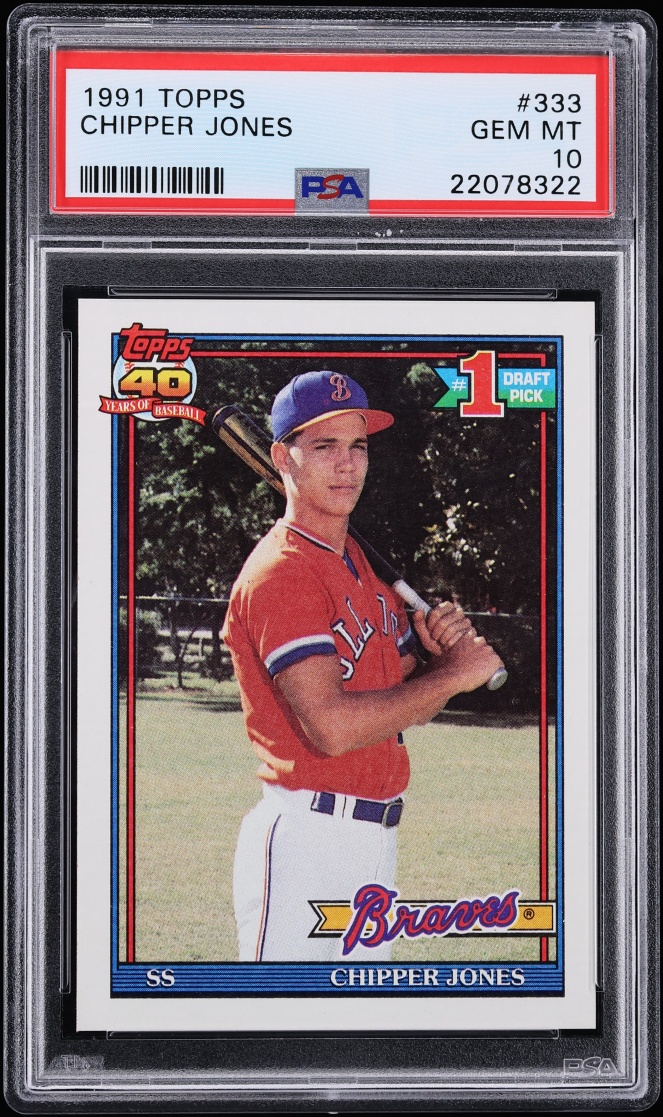
Chipper Jones #333 · Draft Pick · PSA 10

Free portfolio

Follow the players in this set.

Build your free portfolio to track their Players Invest Scores, card sales and market momentum every day.

Browse athletes

Set overview

A 792-card flagship set

The 1991 Topps Baseball set consists of 792 cards, each measuring 2.5 by 3.5 inches. The front features a vivid color photograph framed by colored piping and a white outer border, with the player's name and team affiliation near the corner. The reverse carries the player's name, position, card number and basic statistics.

The release marked the 10th anniversary of Topps issuing a 792-card set and the company's 40th anniversary. To celebrate, Topps added a "Topps 40" logo to the fronts and backs of the cards, although versions without the logo on the back are also known.

The checklist includes several subsets: Record Breakers on cards #2 through #8 and All-Stars on cards #386 through #407, with Draft Picks and Future Stars cards distributed throughout. The release is also remembered for its "1 of every card ever produced" sweepstakes and a number of unusual printing and design errors.

Checklist

792 cards

Card size

2.5 × 3.5 in

Record Breakers

#2–#8

All-Stars

#386–#407

The rookie card to know

Chipper Jones anchors the checklist

One rookie card carries most of the modern demand in the set: the future Hall of Famer who spent his entire career with the Atlanta Braves.

Chipper Jones #333 1991 Topps
Rookie card · Draft Pick#333PSA 10

Chipper Jones

1991 Topps

Chipper Jones' rookie card is one of the major attractions in the 1991 Topps checklist. Jones went on to become a cornerstone of the Atlanta Braves and a Hall of Famer, making his early cards important to collectors following his career.

His #333 card is a natural starting point for collectors exploring the set, including those interested in comparing the standard card with any authenticated special version.

The Draft Pick designation on the front identifies the card. Desert Shield examples of the same card trade on their own population and should be researched separately.

PSA price guide · standard issue

NM-MT 8
$10
MT 9
$25
GEM-MT 10
$90+

Chipper Jones (R) (HOF) #333 · reference figures, not guaranteed selling prices. Verify current sales.
Key players and cards

The stars that carry the set

Beyond the rookie card, the checklist is built around established names whose careers kept their 1991 cards relevant across collecting generations.

#790

Ken Griffey Jr.

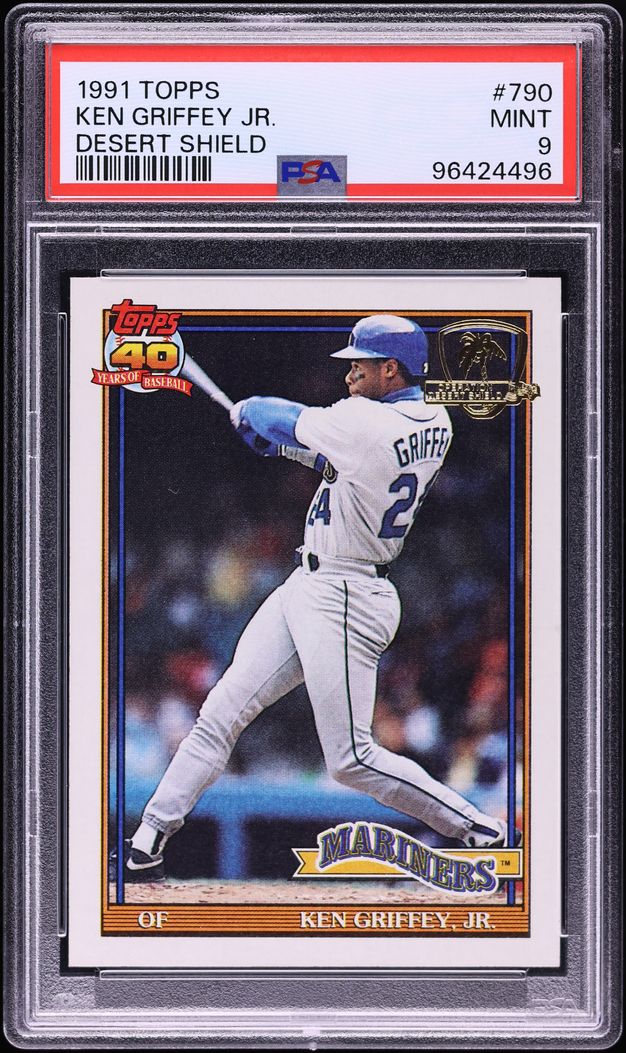
Griffey's #790 card is a major star card near the end of the checklist. His popularity and Hall of Fame career have kept his cards relevant across multiple releases and collecting generations.

#79

Frank Thomas

Known as "The Big Hurt," Thomas provides a key target for fans of the Chicago White Sox slugger and one of the era's most prominent hitters.

#1

Nolan Ryan

Ryan anchors the set at card #1. One of baseball's most recognizable pitchers, he is a natural centerpiece for collectors building the 1991 set or a player-focused collection.

#35

Greg Maddux

One of the game's defining pitchers of the era. His command, consistency and Hall of Fame career make him a notable name in the checklist.

#150

Cal Ripken Jr.

Ripken's durability and historic career make him an enduring subject for baseball card collectors, and his #150 card is one of the set's key star cards.

#140

Ozzie Smith

Ozzie Smith's #140 card brings one of baseball's most celebrated defensive shortstops into the collection.

#530

Roger Clemens

Clemens' #530 card adds another prominent pitcher to the set's star lineup.

The Desert Shield variation

Gold-foil emblems and a military distribution

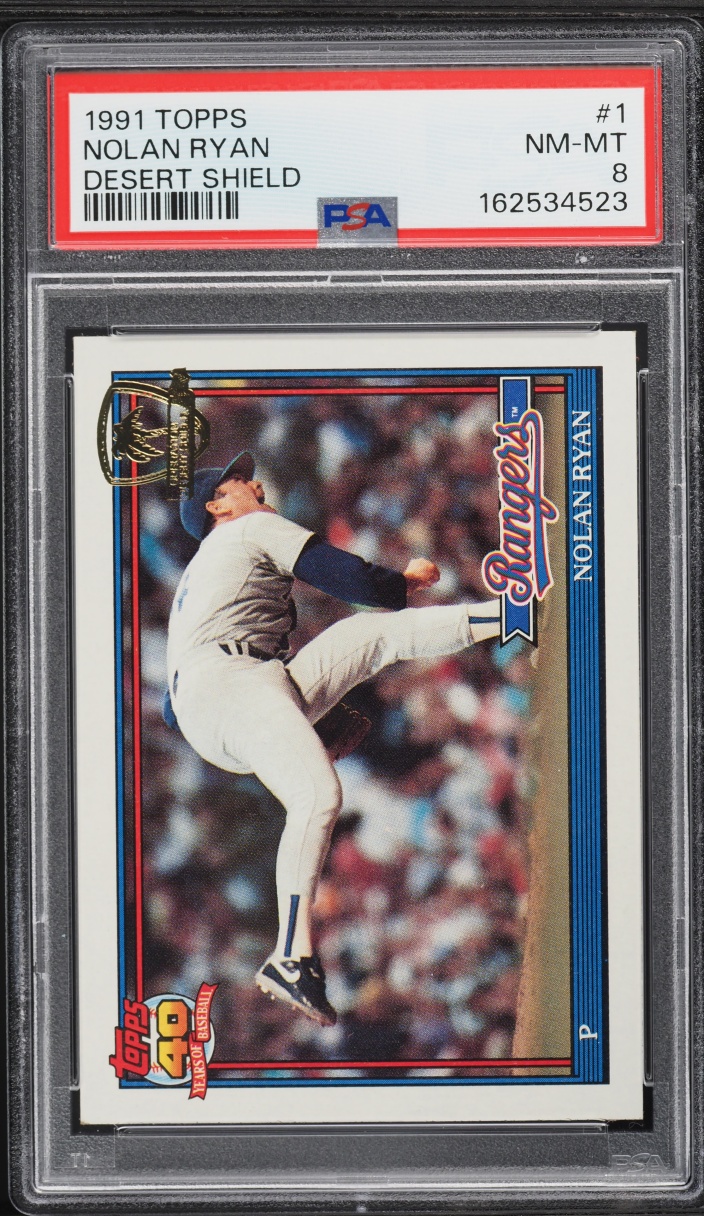
Desert Shield cards were created for distribution to U.S. military personnel serving during the Gulf War. Each carries a gold-foil Desert Shield emblem that separates it from the standard issue, and their limited availability makes them a distinct collecting category rather than simply another color variation.

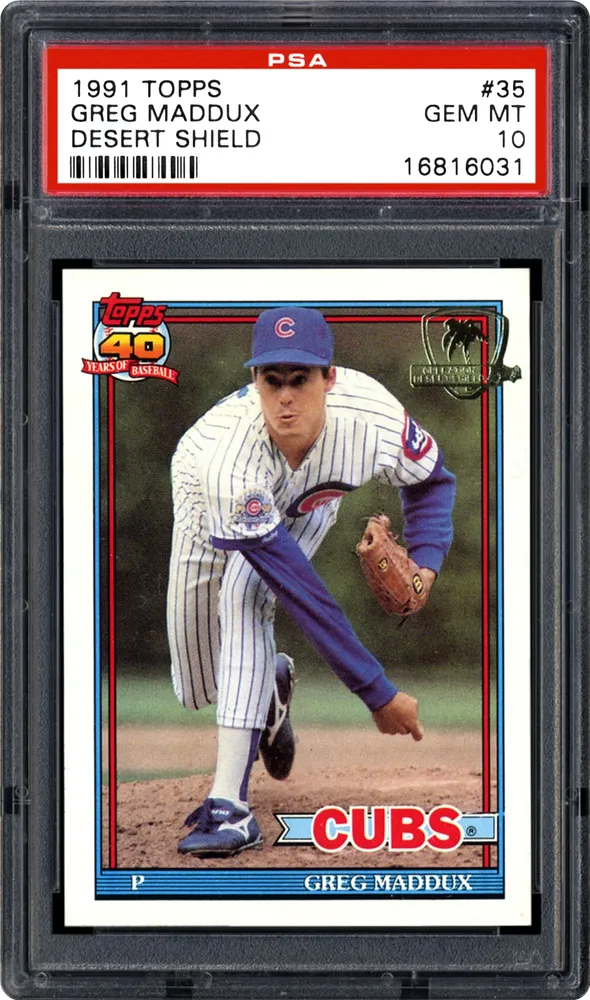
Greg Maddux #35 card
#35PSA 10

Greg Maddux

The emblem sits in the upper corner of the photo area, inside the same piping that frames the standard card.

Nolan Ryan #1 card
#1PSA 8

Nolan Ryan

As card #1 of the checklist, Ryan is one of the most collected subjects in the Desert Shield run.

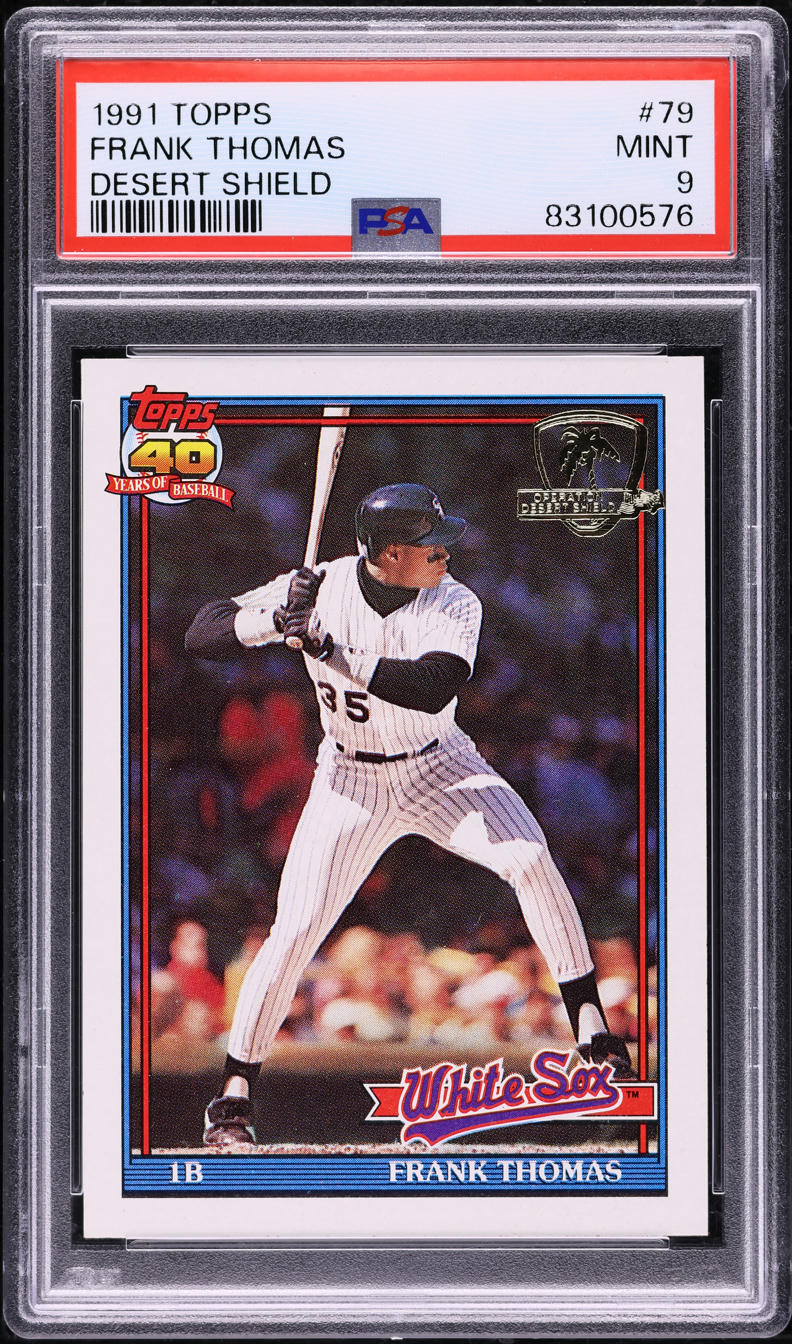
Frank Thomas #79 card
#79PSA 9

Frank Thomas

The Big Hurt's early card is a target for White Sox collectors in either version.

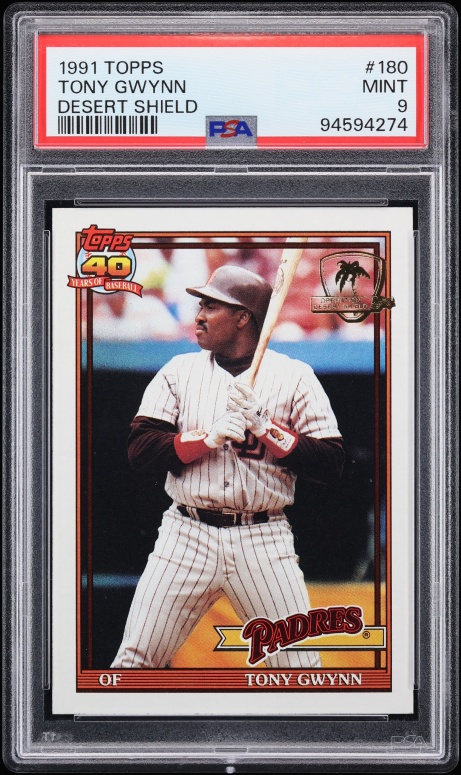
Tony Gwynn #180 card
#180PSA 9

Tony Gwynn

Gwynn's card shows how the gold emblem sits beside the Topps 40 logo on the same frame.

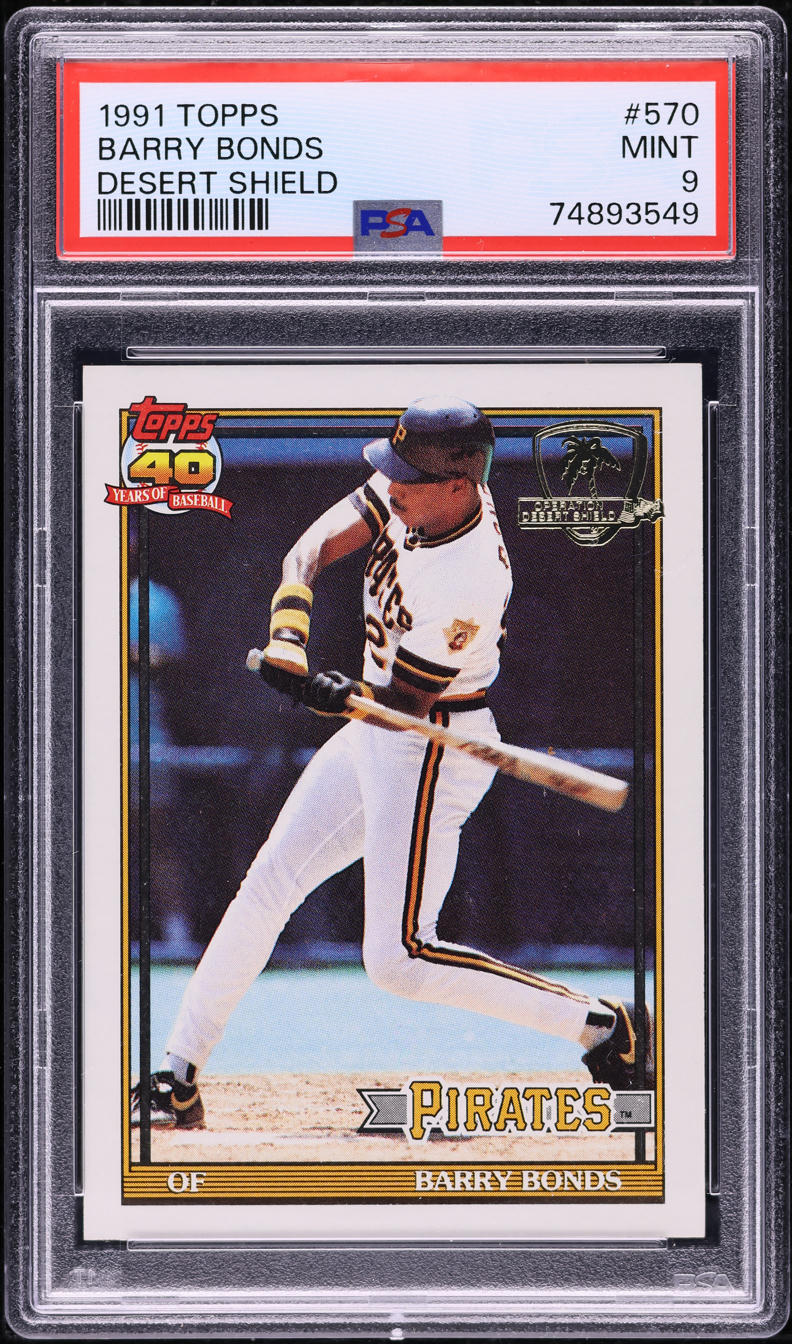
Barry Bonds #570 card
#570PSA 9

Barry Bonds

Late in the checklist, Bonds is one of the higher-profile names in the Desert Shield run.

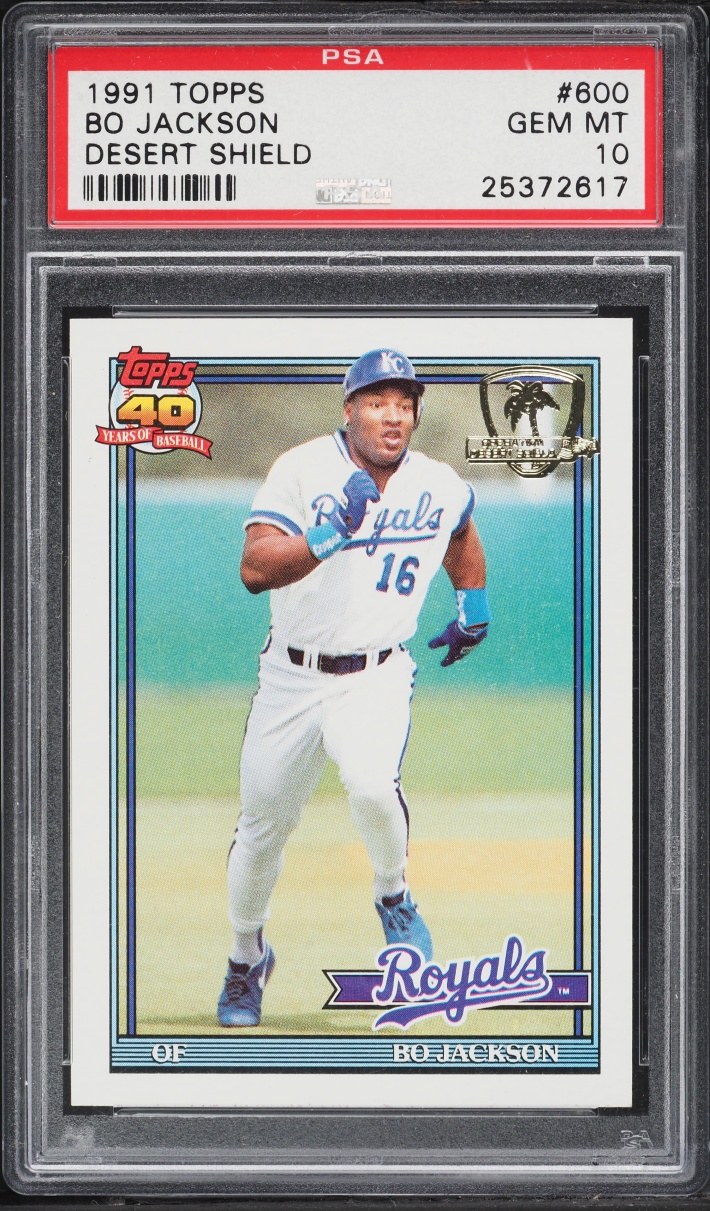
Bo Jackson #600 card
#600PSA 10

Bo Jackson

Bo Jackson's crossover appeal keeps his cards in demand across both versions of the set.

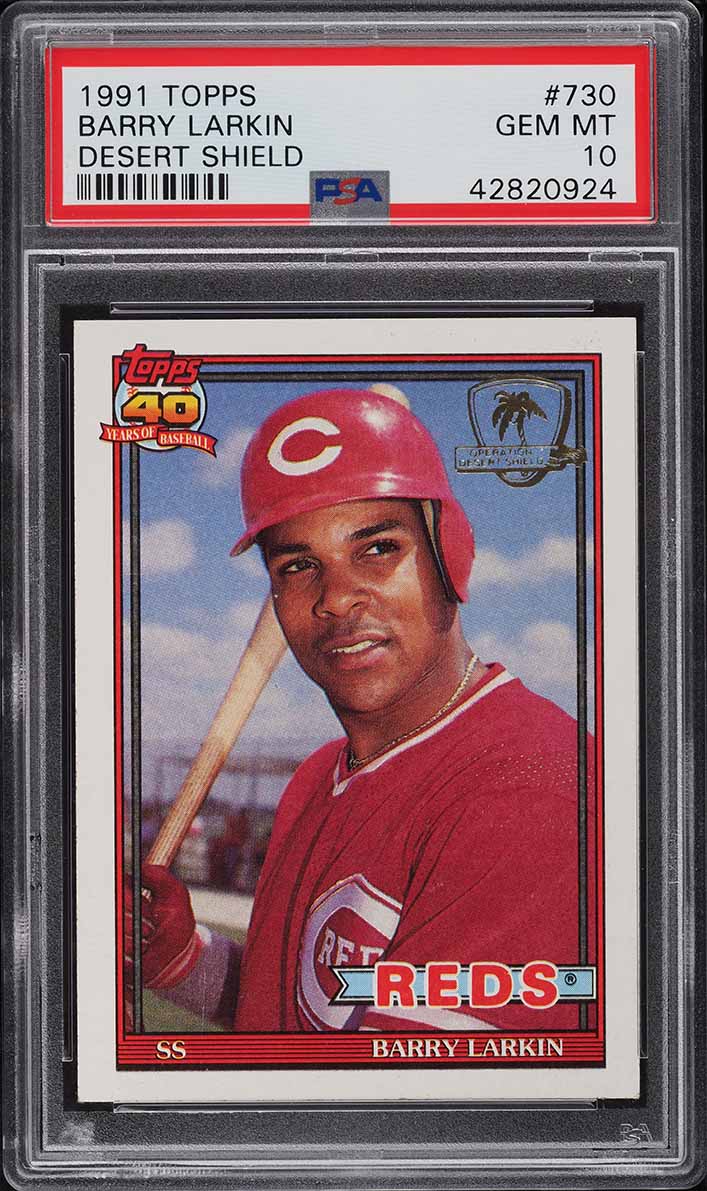
Barry Larkin #730 card
#730GEM MT 10

Barry Larkin

The Reds shortstop sits late in the checklist, with the emblem and the Topps 40 logo sharing the same red frame.

Ken Griffey Jr. #790 card
#790PSA 9

Ken Griffey Jr.

Griffey closes the checklist at #790 and is one of the most pursued Desert Shield subjects.

What to look for

The gold-foil emblem: the Desert Shield logo is the key visual feature separating these cards from standard versions.

Card condition: examine the foil, corners, edges, centering and surface for wear or damage, since foil damage is easy to overlook in photos.

Authenticity: because the emblem is central to the card's identity and value, verify authenticity and the exact designation before a significant purchase.

Player and card number: star players and key rookie cards can make particular examples especially interesting to collectors.

Desert Shield cards should be evaluated separately from their standard counterparts. A price for a regular base card should not be used as a direct estimate for the Desert Shield version.

Subsets and anniversary marks

Topps 40, Record Breakers and All-Stars

Record Breakers occupies cards #2 through #8 and All-Stars runs from #386 through #407. Draft Picks and Future Stars cards, including Chipper Jones' rookie, are distributed throughout the checklist rather than grouped in one block.

The "Topps 40" logo appears on the fronts and backs of cards as the company marked its 40th anniversary and the 10th anniversary of a 792-card Topps set. Versions without the logo on the back are also known, which is worth confirming on any card where that distinction matters.

Record Breakers

#2–#8

All-Stars

#386–#407

Version check

Standard issue vs. Desert Shield

Both versions share the same checklist and the same 1991 design. The emblem, the distribution and the market are what separate them.

Standard 1991 Topps

  • Full 792-card checklist
  • Mass-market release and easy to find
  • No Desert Shield emblem
  • Covered by the PSA guide table below
  • Colored piping and white outer border

Desert Shield

  • Gold-foil Desert Shield emblem
  • Produced for military distribution
  • Far more limited than the standard issue
  • Priced separately from standard guide values
  • Authenticity and emblem condition matter most

Standard and Desert Shield cards can look similar at first glance, so identify the emblem before comparing any price.

What moves the price

What affects value?

Player popularity: Hall of Famers and major rookie cards are natural targets for player collectors.

Desert Shield designation: the gold-foil emblem and special distribution make these cards distinct from standard versions.

Condition and grade: centering, corners, edges and surface quality affect grading outcomes.

Error identification: the precise nature of an error matters, so confirm the variation rather than relying on a listing title alone.

Market demand: recent completed sales for the same card and version provide a better comparison than asking prices.

Notable error cards

Printing and design errors to know

Chris Hoiles #42: a version with a white pinstripe rather than black.

Doug Drabek #685: a version with a white pinstripe rather than black.

Mark Whiten #558: a version in which his hand extends into the white border area.

When considering an error card, compare the exact variation with reliable reference images and listings. Not every printing difference necessarily carries a premium, and prices depend on how clearly the variation is established and how much collector demand it attracts.

Collecting tips

How to approach the set

Decide whether your goal is to complete the standard 792-card checklist, focus on key players, or pursue special variations such as Desert Shield and the known error cards. Each route changes what you should be shopping for and how much you should expect to spend per card.

For Desert Shield cards, inspect the emblem closely and verify authenticity. Check the overall condition of the card and confirm that any grading label or seller description accurately identifies the variation.

For graded cards, compare examples of the same card and grade. For raw cards, pay attention to centering, surface marks, corner wear and edge quality. A popular player or scarce variation is not automatically a good purchase at every price.

Price guide

1991 Topps Baseball PSA price guide

The following values are reproduced from the supplied PSA Price Guide information for selected cards from the standard 1991 Topps set. They do not cover the Desert Shield variations.

PSA Price Guide data · 1991 Topps Baseball · US dollars

CardNM-MT 8MT 9GEM-MT 10
Frank Thomas (HOF) #79$5$10$50
Chipper Jones (R) (HOF) #333$10$25$90+
Ken Griffey Jr. (HOF) #790$5$15-$90

Source: PSA Price Guide, 1991 Topps Baseball (psacard.com/priceguide/baseball-card-values/1991-topps/1334). Desert Shield examples should be researched and compared separately, using the exact card, variation and grade. The plus and minus notation is retained as supplied. Guide values can change, so check recent completed sales before buying, selling or submitting a card for grading.

Why 1991 Topps Baseball belongs in The Player Archive

The set combines a large flagship checklist with recognizable stars, a notable rookie card in Chipper Jones, unusual errors and the historically significant Desert Shield variation.

The standard cards offer a snapshot of baseball in the early 1990s, while the Desert Shield versions bring an additional historical story to the hobby. Together they create an opportunity to explore the same release through two very different lenses: the familiar mass-market set and a special military-distributed variation.

Players Invest helps you track the athletes and the cards that shape collector interest and value.

We use cookies

Players Invest uses essential cookies to run the site, plus analytics and advertising cookies to understand how visitors use it and to measure our marketing. You can accept or decline the non-essential ones. Privacy Policy